
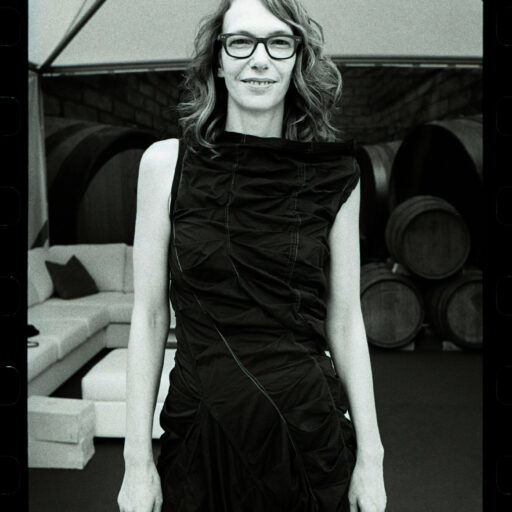
Lejla Hodžić
Curator and designer
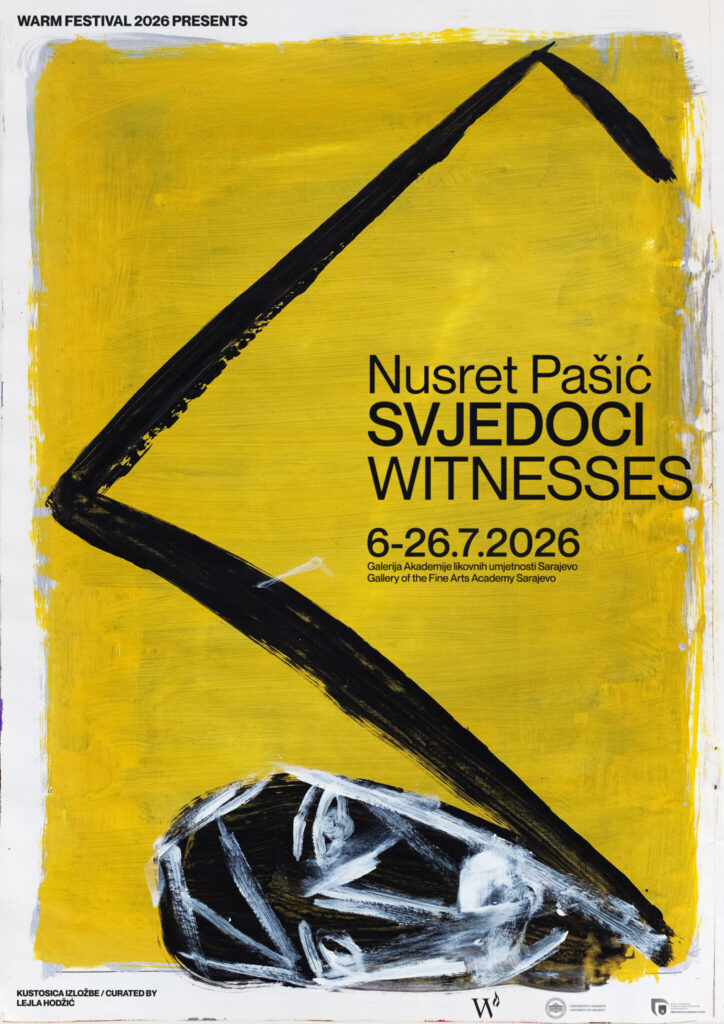
Nusret Pašić: SVJEDOCI (WITNESSES)
Curated by Lejla Hodžić
Academy of Fine Arts Sarajevo
WARM Festival 2026
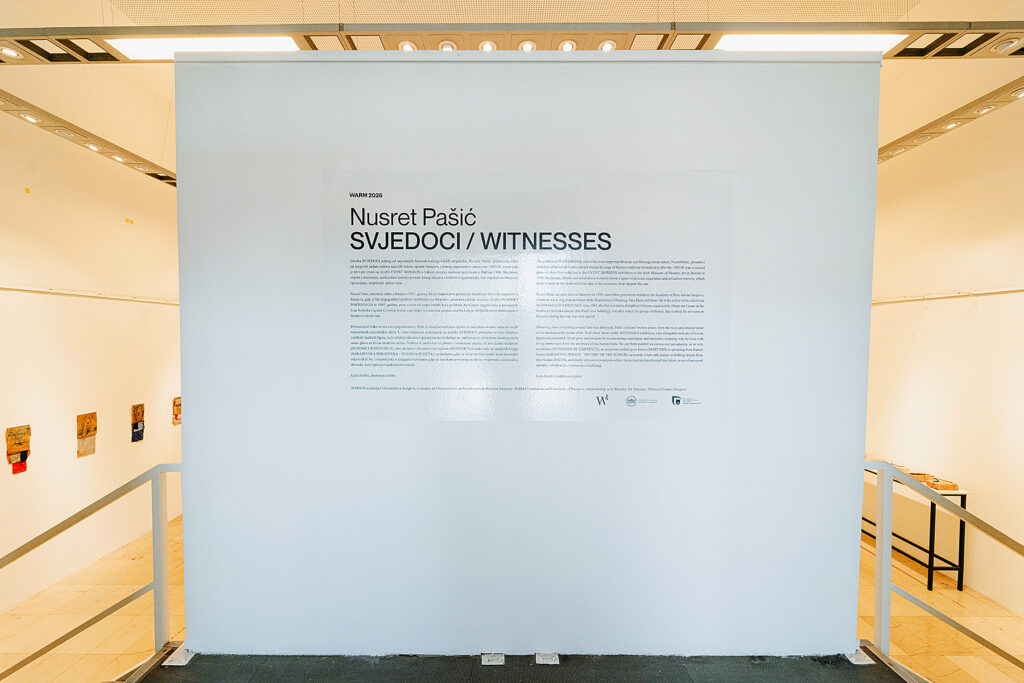
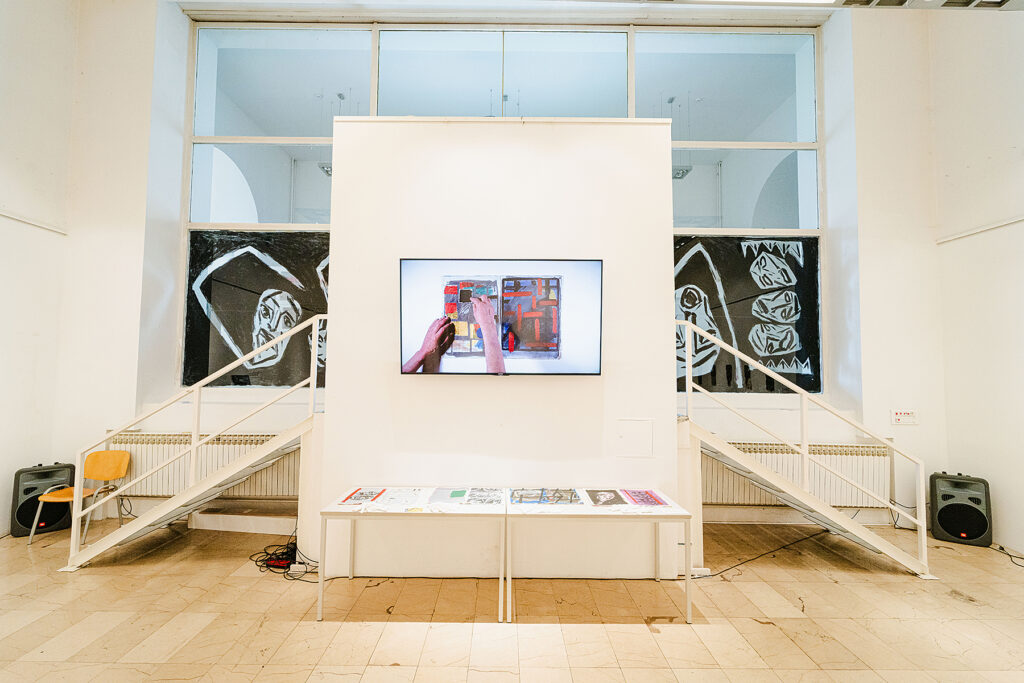
The exhibition WITNESSES by one of the most important Bosnian and Herzegovinian artists, Nusret Pašić, as part of the WARM Festival 2026, presents for the first time in Sarajevo a selection of seven of Pašić’s works created during the siege of Sarajevo and one immediately after the 1992-95 war. Sculptures, objects and installations create a space of personal experience and collective memory, which bears witness to the destruction but also to the existence of art despite the war.
Nusret Pašić, an artist born in Sarajevo in 1951, was a first-generation student at the Academy of Fine Arts in Sarajevo in the class of Professor Borislav Aleksić, which he completed in 1976, and completed his postgraduate studies at the Faculty of Fine Arts in Belgrade in 1983 in the class of Professor Stojan Ćelić. A long-time professor at the Academy of Fine Arts in Sarajevo, in the Department of Painting (until 2018), he was the Vice-Dean of the Academy from 2002 to 2005 and Dean from 2007 to 2011. He is one of the founders of the Obala Art Center and the author of the exhibition WITNESSES OF EXISTENCE 1992, one in a series of eight exhibitions that were set up in the destroyed Sutjeska Cinema (the Red Cross building), in the period 1992-93, and after which the group exhibition that marked the art scene in Sarajevo during the war was also named.
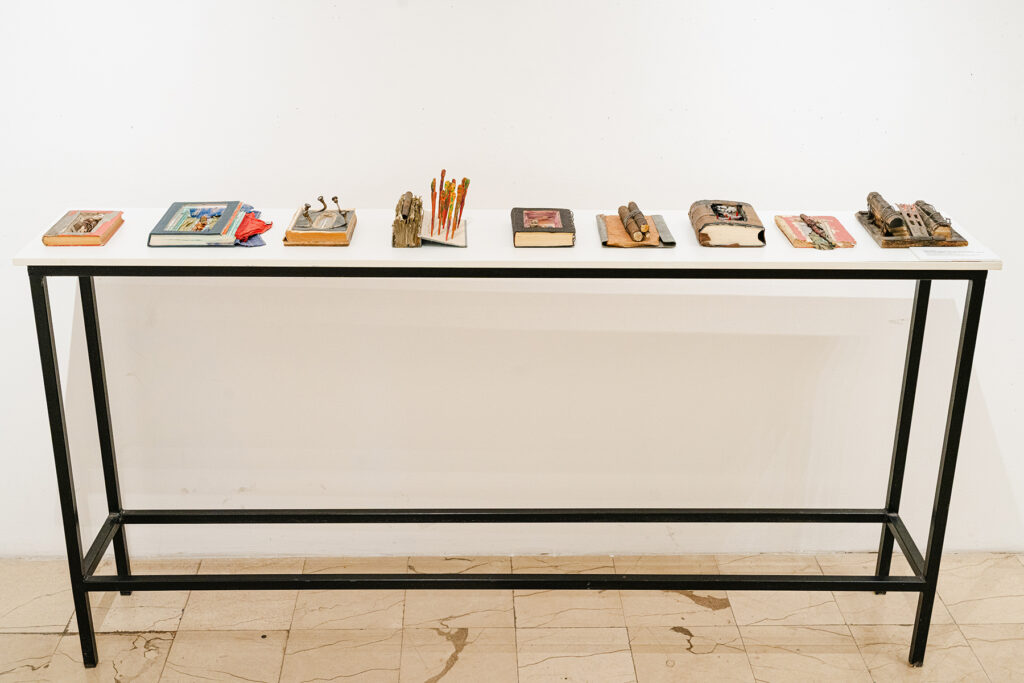
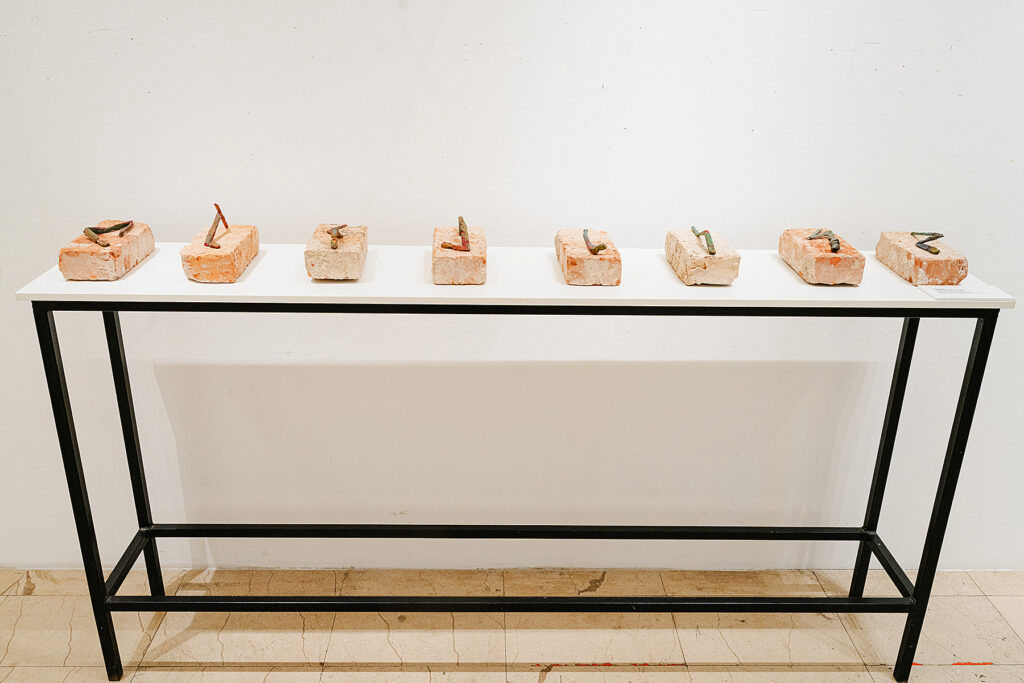
During the siege of Sarajevo from 1992-95, Nusret Pašić, watching everything around him being destroyed, collected broken pieces from the ruins and created some of his most powerful works of art. At a time when every weapon available to crush the human spirit was aimed at his home, his spirit not only survived, but also grew stronger. Bricks from destroyed buildings, glass from broken windows, burnt wooden logs, ashes, wire, books from the burnt City Hall (Vijećnica) and newspapers became the artist’s material, transformed from a symbol of death into renewed life through art. During the war, Nusret Pašić took these artistic materials and began to create. He took what others had destroyed and created reminders of the pain and suffering caused by the war. He could not save the buildings or the people. But he could create a monument to them through his art.
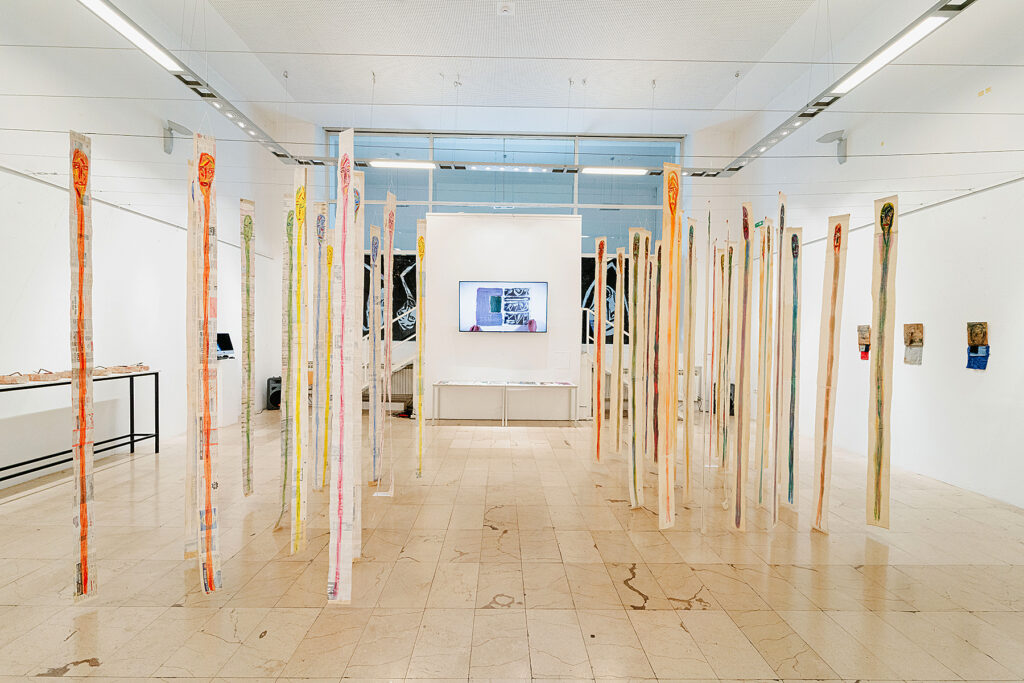
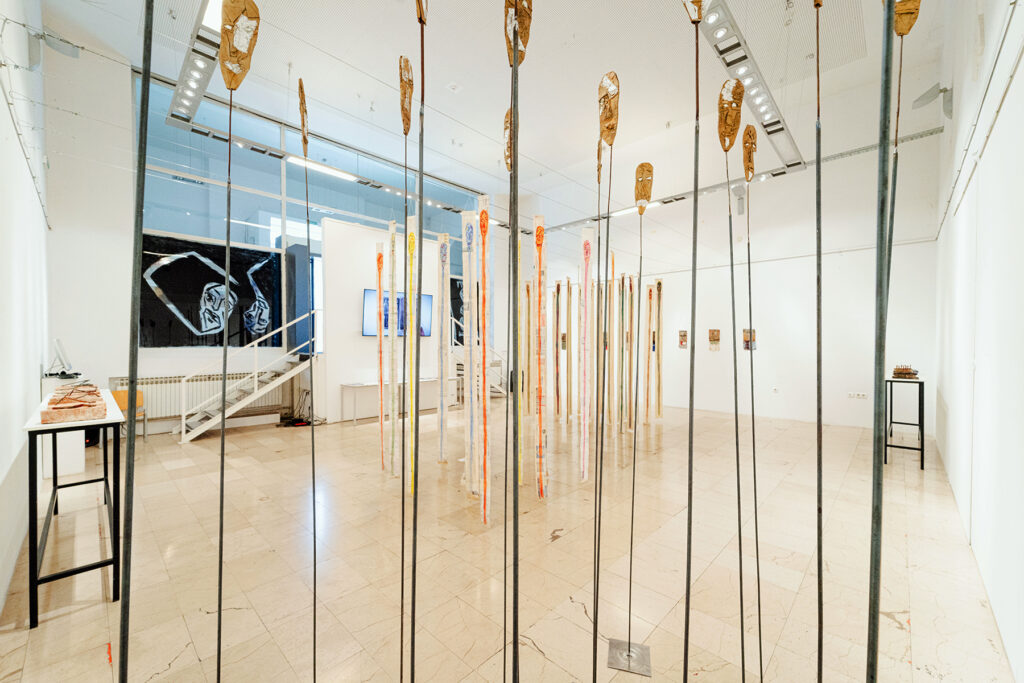
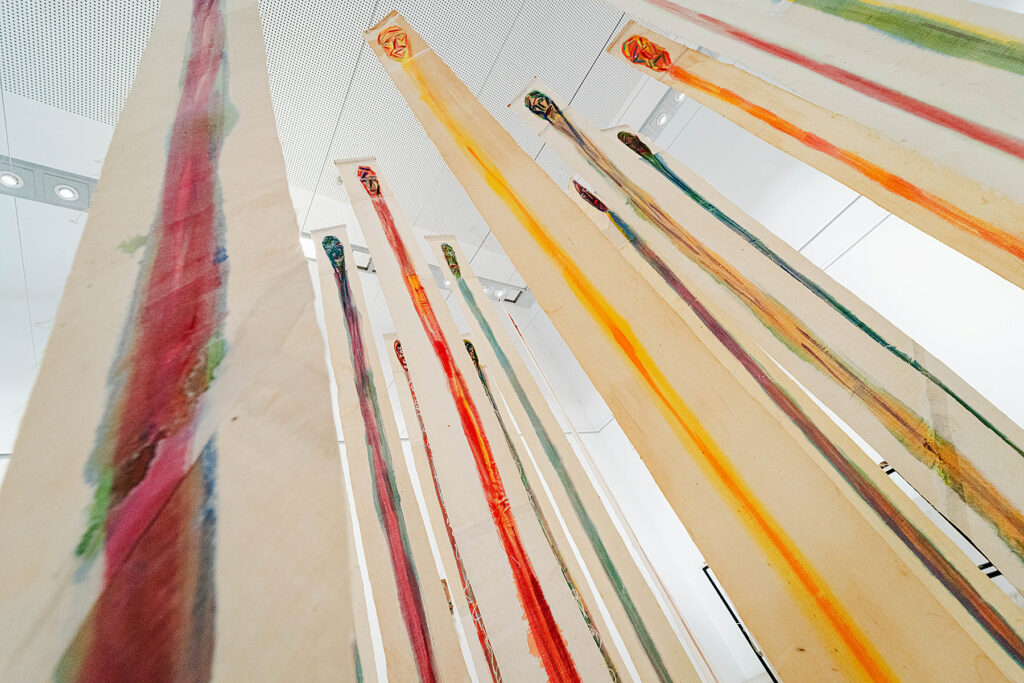
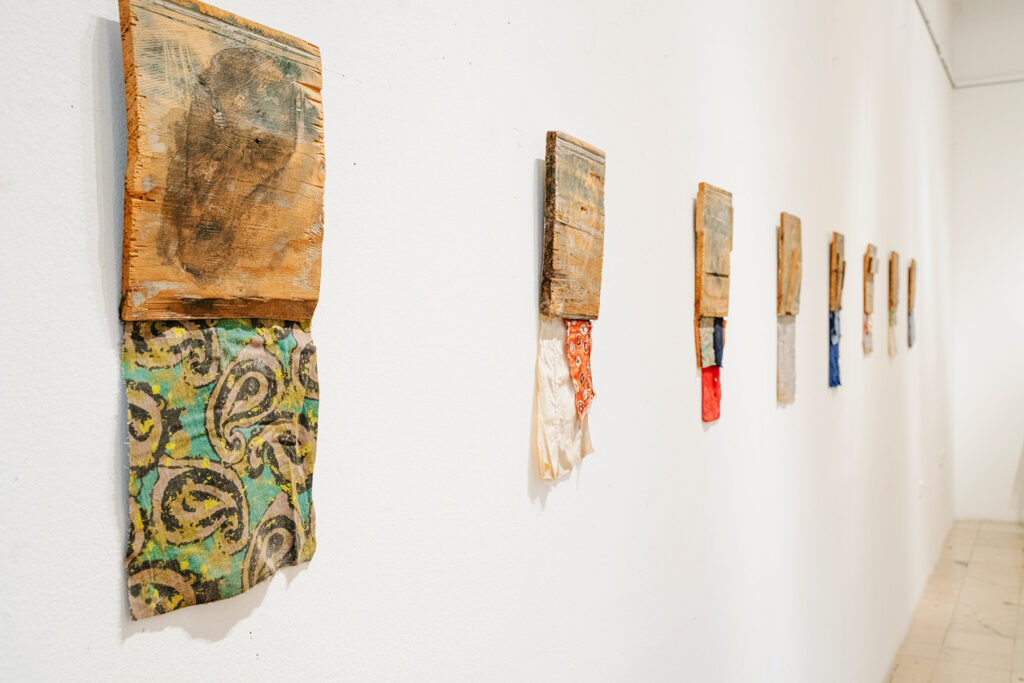
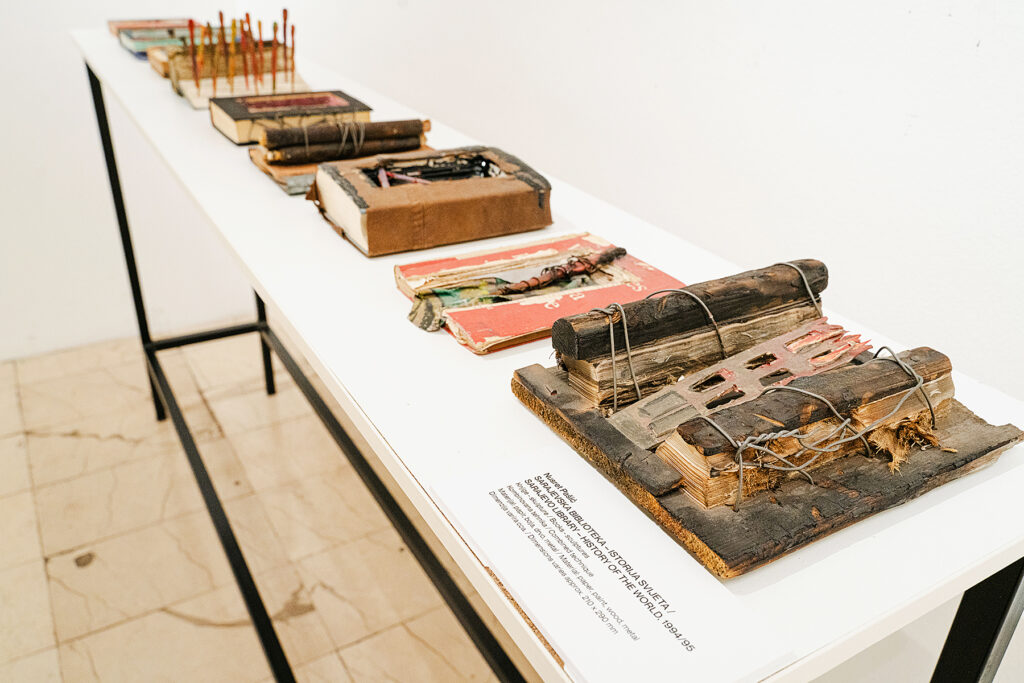
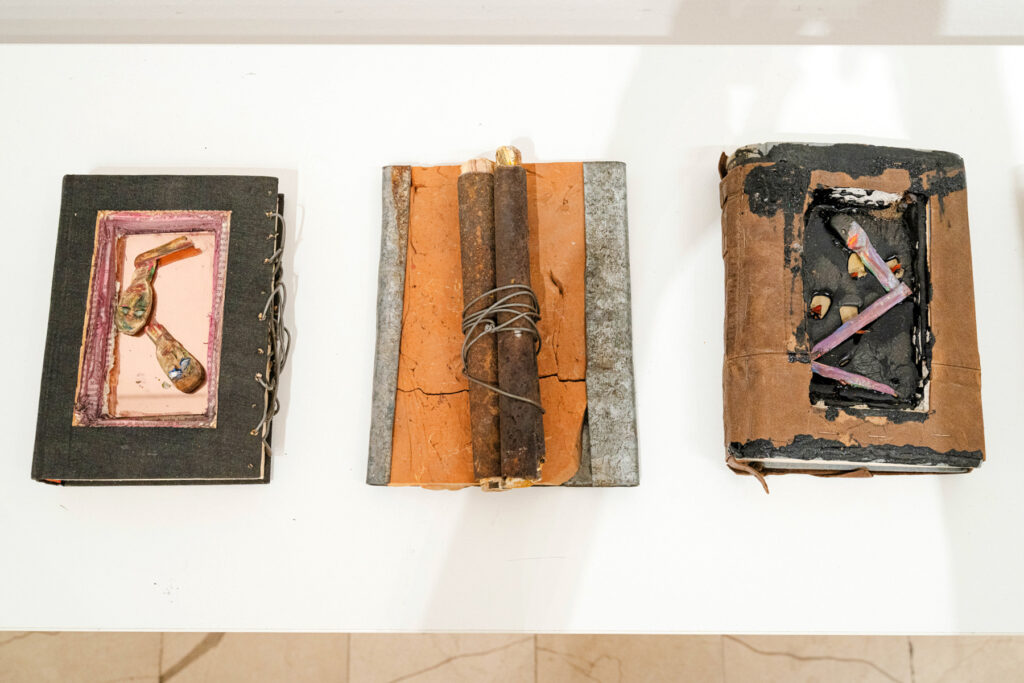
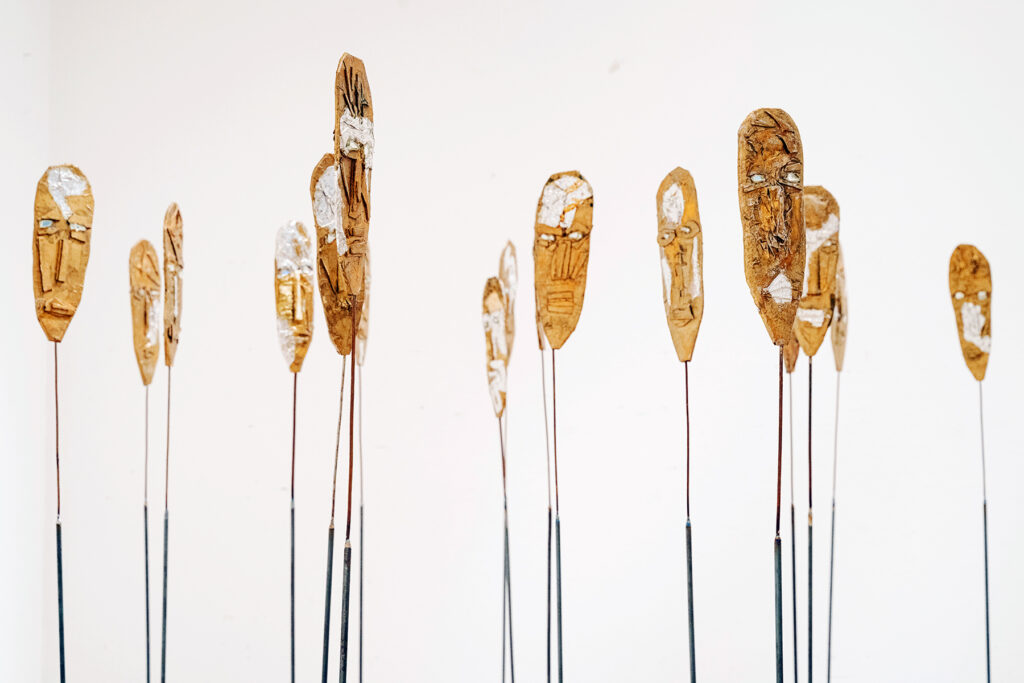
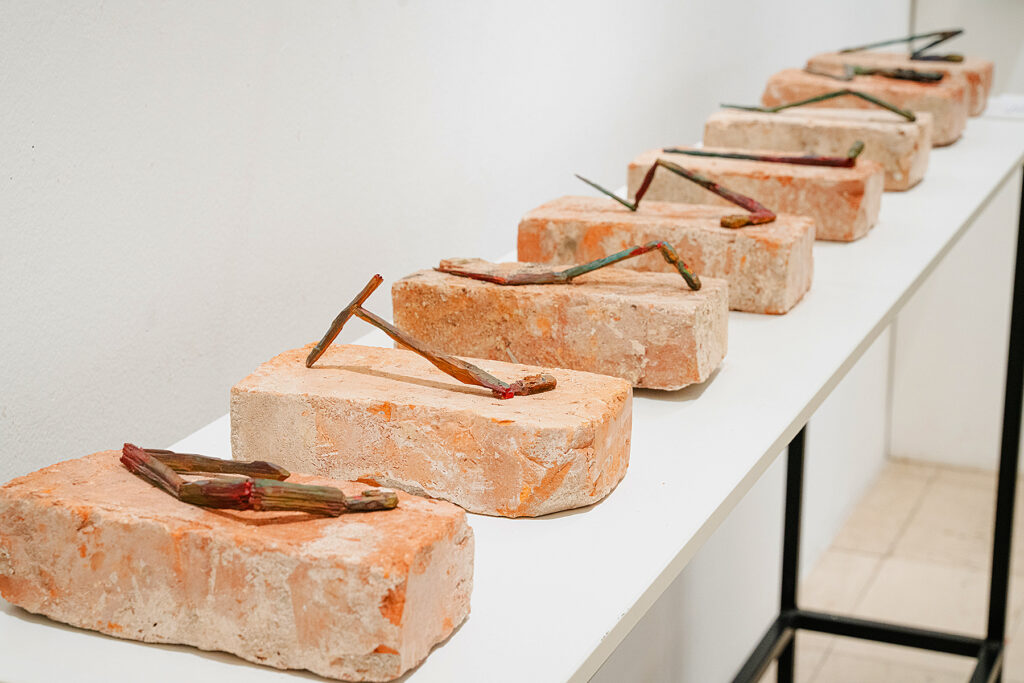
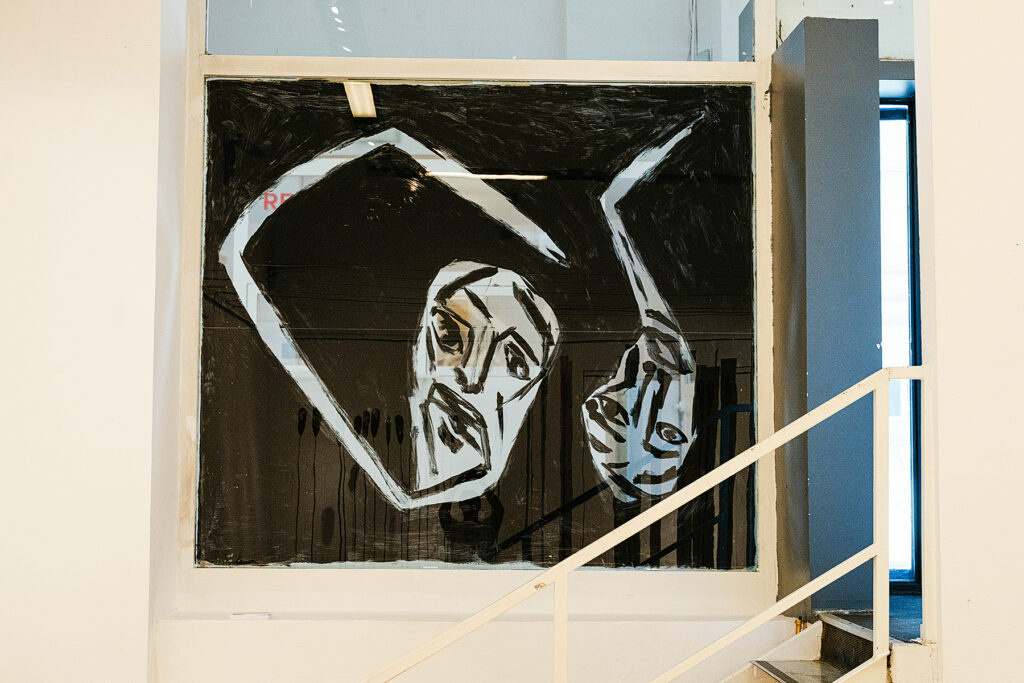
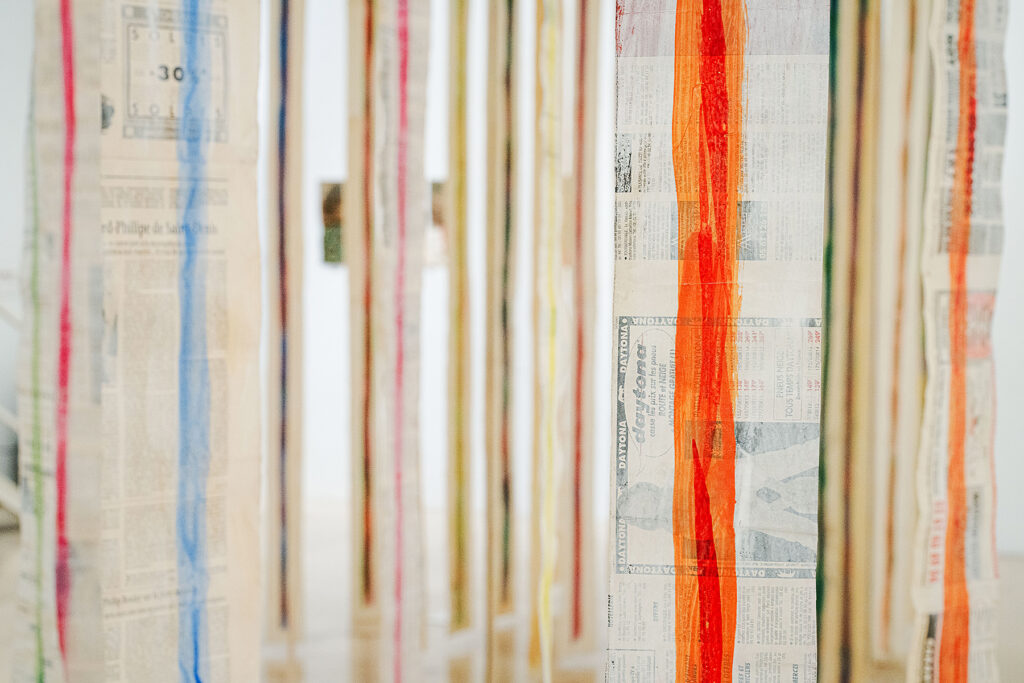
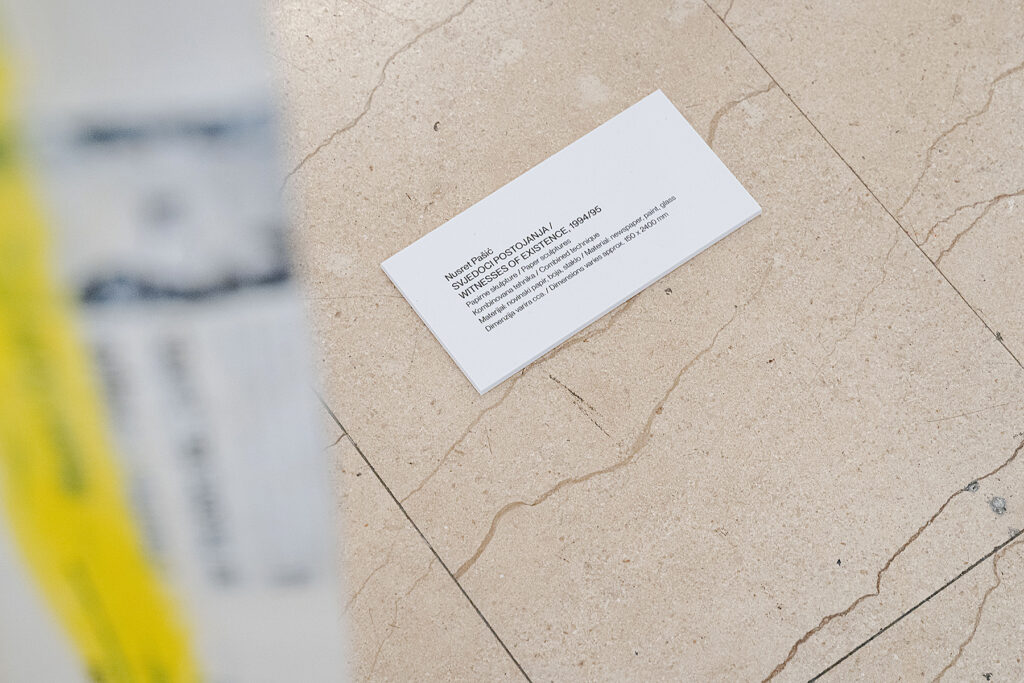
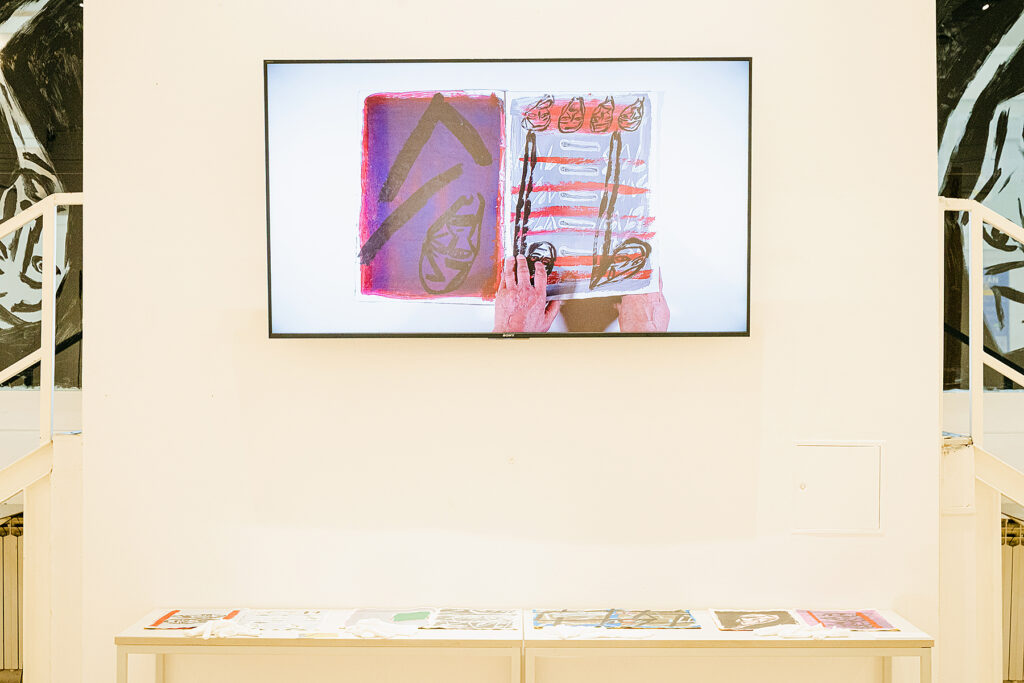
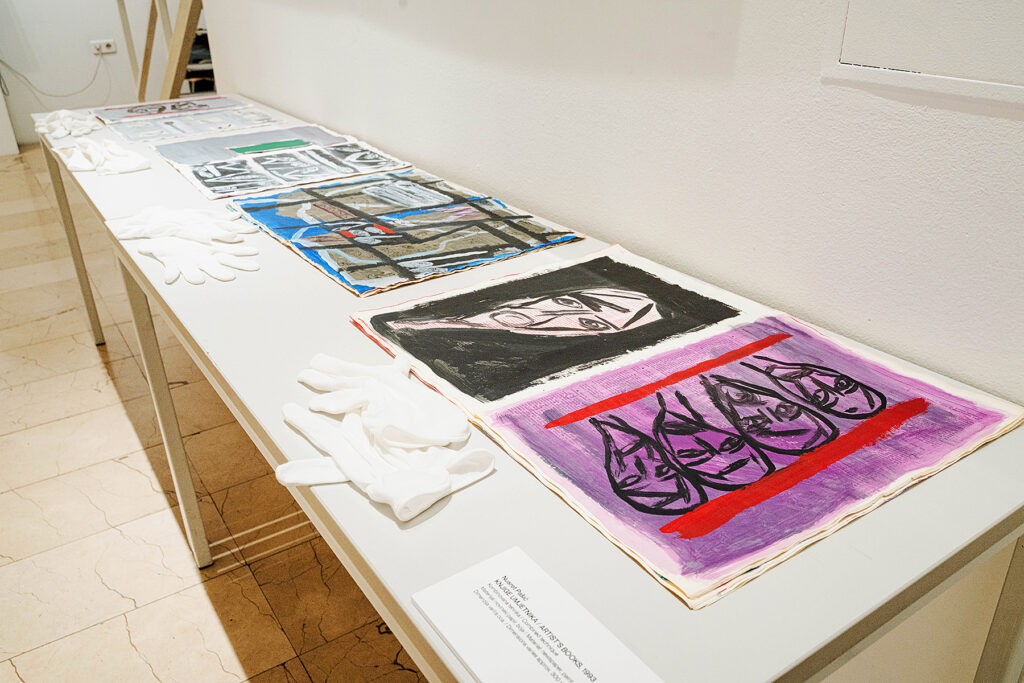
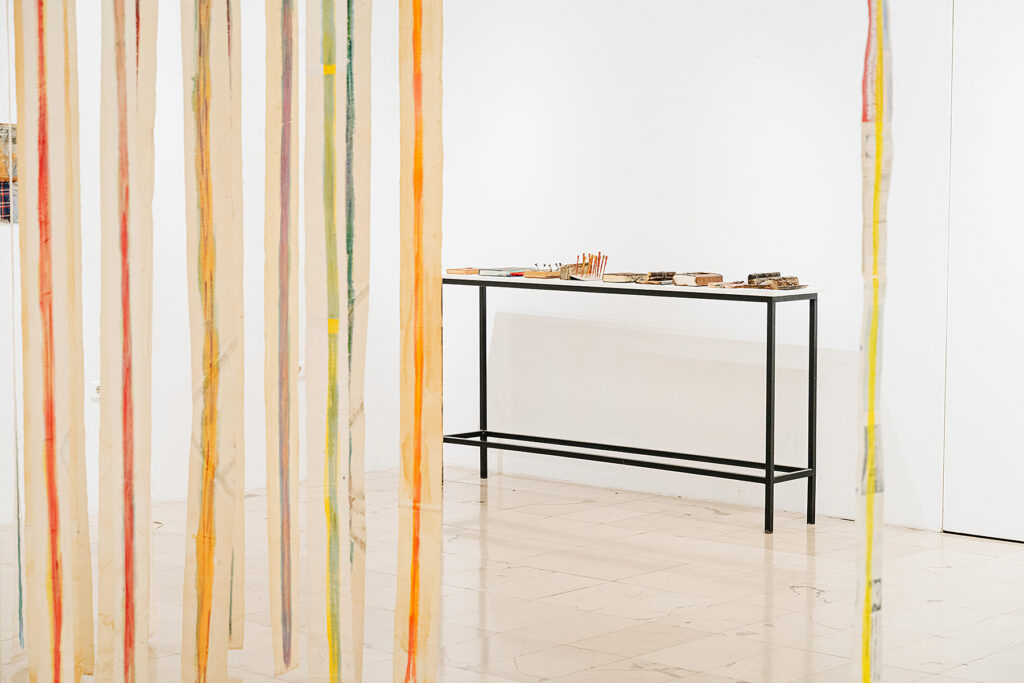
The exhibition WITNESSES includes seven works created during the war and a stained glass window that he first showed as a part of EVENT HORIZON exhibition at the Irish Museum of Modern Art in Dublin in 1996. In all the works, the primary ones are the very elongated verticals of human figures, which, accumulating experiences and memories, grow and lengthen, retaining the head with living mirror eyes as a tribute to the human body. We see them painted on canvas and newsprint, or as wire sculptures greatly elongated in installations that tower over us (WITNESSES OF EXISTENCE), as sculptures curled up on bricks (MARTYRS) or sprouting from burned books (SARAJEVO LIBRARY – HISTORY OF THE WORLD), on boards where only pieces of clothing remain from their bodies (FACES), and finally in books/newspapers where the painted turns into letters which write a testimony of suffering, a sort of universal alphabet to help everyone understand the country’s suffering in war. The exhibition also featured video documentation of the installation of the works during and after the war.
In the words of the artist himself on the occasion of the exhibition WITNESSES OF EXISTENCE, organized by Obala Art Center, in the demolished Red Cross building in 1992:
“Meditating on these verticals, I lengthen them until a doubt arises: do these watercolored stem-like figures grow from the depths of time, striving for height, or do they stretch out more to reach the ground? Will they perhaps dematerialize through infinite elongation and thus only bear witness to human existence as spear-shaped structured energy and universes?”
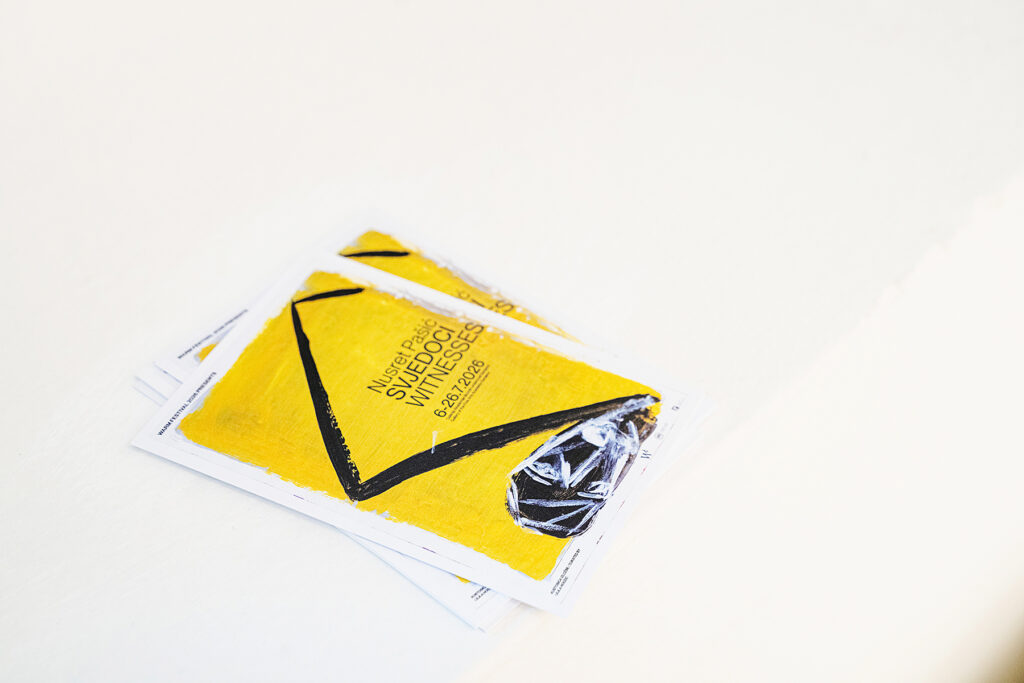
The exhibition, set up at the Gallery of the Academy of Fine Arts in Sarajevo, from July 6 to 26, 2026, is realized by WARM Festival in cooperation with the Ministry for Veterans Affairs of the Sarajevo Canton, and the University of Sarajevo.
Lejla Hodžić, exhibition curator
Nusret Pašić: SVJEDOCI
Izložba SVJEDOCI, jednog od najznačajnijih bosanskohercegovačkih umjetnika, Nusreta Pašića u okviru WARM Festivala 2026, po prvi put u Sarajevu zajedno predstavlja izbor od sedam Pašićevih radova nastalih tokom opsade Sarajeva i jedan neposredno nakon rata 1992-95. Skulpture, objekti i instalacije, međusobno kreiraju prostor ličnog iskustva i kolektivnog pamćenja, koji svjedoči uništenju ali i postojanju umjetnosti uprkos ratu.
Nusret Pašić, umjetnik rođen u Sarajevu 1951., bio je student prve generacije Akademije likovnih umjetnosti u Sarajevu u klasi profesora Borislava Aleksića, koju je završio 1976. godine, a postdiplomski studij na Fakultetu likovnih umjetnosti u Beogradu 1983. godine u klasi profesora Stojana Ćelića. Dugogodišnji profesor Akademije likovnih umjetnosti u Sarajevu, na odsjeku za slikarstvo (do 2018. godine), bio je prodekan Akademije od 2002. do 2005. godine i dekan od 2007. do 2011. Jedan je od osnivača Obala Art Centra i autor izložbe SVJEDOCI POSTOJANJA 1992. jedne u seriji od osam izložbi koje su postavljene u porušenom kinu Sutjeska (zgrada Crvenog krsta), u periodu 1992-93, a po kojoj je nazvana i grupna izložba koja je obilježila umjetničku scenu u Sarajevu tokom rata.
Tokom opsade Sarajeva 1992-95, Nusret Pašić je, posmatrajući kako se sve oko njega uništava, iz ruševina skupljao razbijene djeliće i stvarao neka od svojih najmoćnijih umjetničkih djela. U vrijeme kada je svako oružje dostupno za slamanje ljudskog duha bilo usmjereno na njegov dom, njegov duh ne samo da je preživio, već se i osnažio. Cigle iz uništenih zgrada, stakla razbijenih prozora, spaljeni drveni trupci, pepeo, žicu, knjige iz spaljene Vijećnice i novine postale su umjetnikov materijal, pretvorene su iz simbola smrti u obnovljeni život kroz umjetnost. Nusret Pašić je tokom rata uzeo je te umjetničke materijale i počeo stvarati. Uzeo je ono što su drugi uništili i stvorio podsjetnike na bol i patnju uzrokovanu ratom. Nije mogao spasiti zgrade ni ljude. Ali mogao je stvoriti spomenik njima kroz svoju umjetnost.
Izložba SVJEDOCI obuhvata sedam radova koji su nastali tokom rata i vitraž koji je prvi put izveo na izložbi EVENT HORIZON u Irskom muzeju moderne umjetnosti u Dablinu 1996. U svim radovima primarne su jako izdužene vertikale ljudskih figura, koje taložeći iskustva i sjećanja rastu i izdužuju se zadržavajući od tributa ljudskog tijela glavu sa živim zrcalnim očima. Vidimo ih naslikane na platnu i novinskom papiru, ili kao žičane skulpture jako izdužene u instalacijama koje nas nadvisuju (SVJEDOCI POSTOJANJA), kao skulpture sklupčane na ciglama (MUČENICI) ili kako niču iz spaljenih knjiga (SARAJEVSKA BIBLIOTEKA – ISTORIJA SVIJETA), na daskama gdje su im je od tijela ostali samo komadići odjeće (LICA), i naposljetku u knjigama/novinama gdje se naslikane pretvaraju u slova koja ispisuju svjedočanstvo o stradanju, svojevrsnu univerzalnu abecedu kako bi pomogao svima da razumiju patnju zemlje u ratu. Na izložbi je prikazana i video dokumentacija postavki radova tokom i poslije rata.
Po riječima samog umjetnika povodom izložbe SVJEDOCI POSTOJANJA, u organizaciji Obala Art Centra, u srušenoj zgradi Crvenog krsta 1992. godine:
“Meditirajući o ovim vertikalama izdužujem ih sve dotle dok se ne javi nedoumica: da li te akvarelisane stabljičaste figure izrastaju iz dubine vremena stremeći u visinu ili pak vise istežuti se kako bi dosegnule tlo? Hoće li se možda beskonačnim izduživanjem dematerijalizirati i tako samo kao kopljasto strukturirana energija i vasioni svjedočiti o ljudskom postojanju?”
Izložba postavljena u Galeriji Akademije likovnih umjetnosti Sarajevo, od 6. do 26. jula 2026. godine, realizirana je u saradnji WARM festivala sa Ministarstvom za boračka pitanja Kantona Sarajevo i Univerzitetom u Sarajevu.
Lejla Hodžić, kustosica izložbe