
Lejla Hodžić
Curator and designer

Newsha Tavakolian
Photographer
And They Laughed at Me
A photo exhibition
In partnership with Kultura na ulice 2024!
Curated and designed by Lejla Hodžić
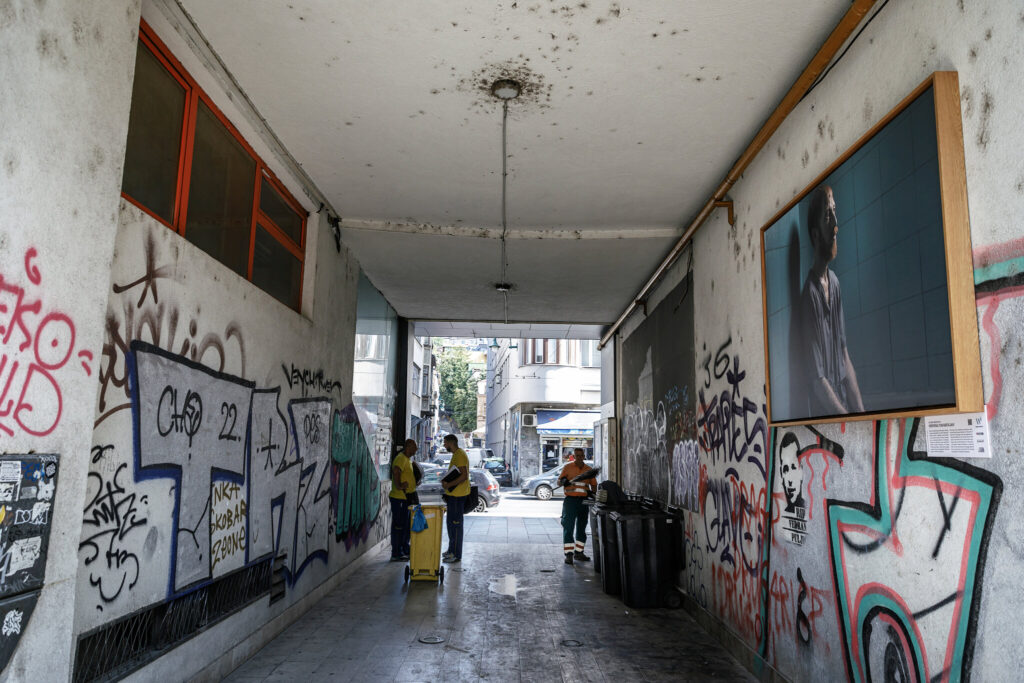
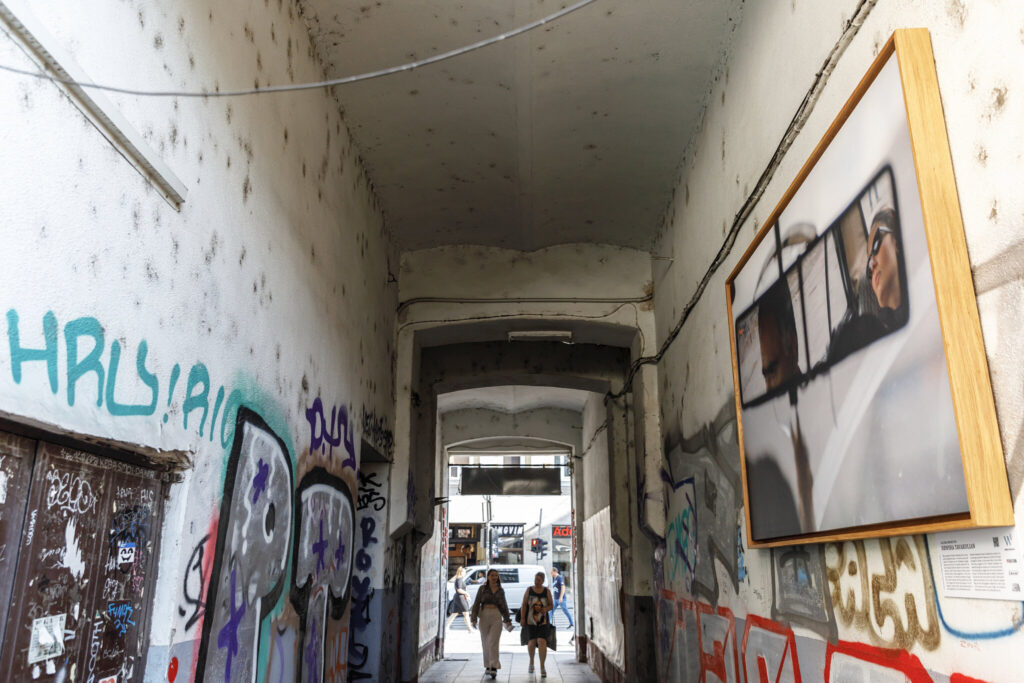
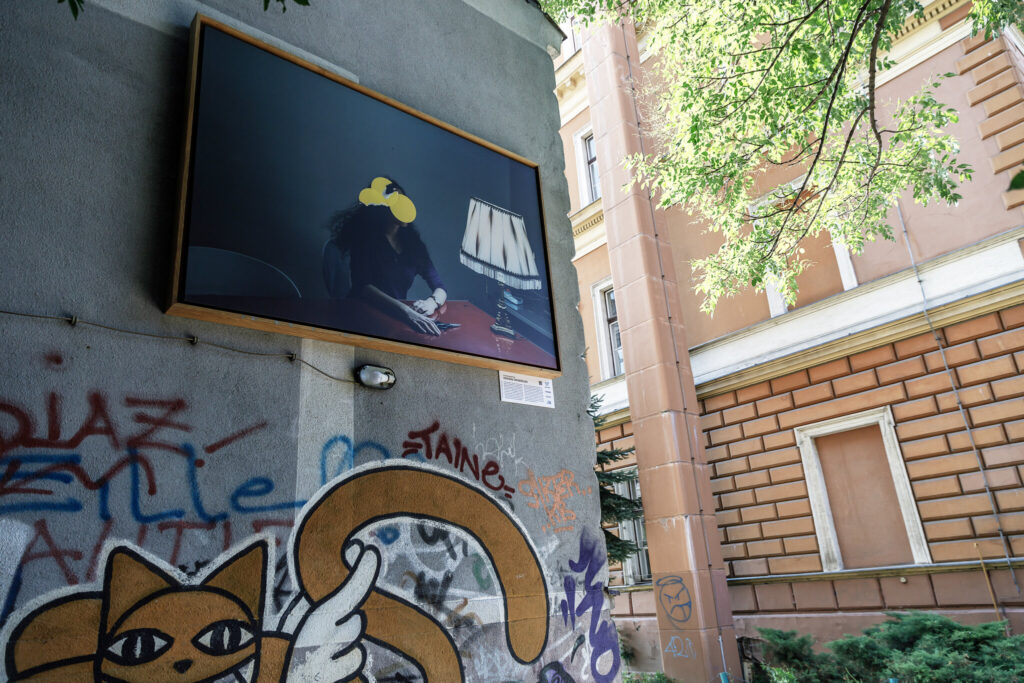
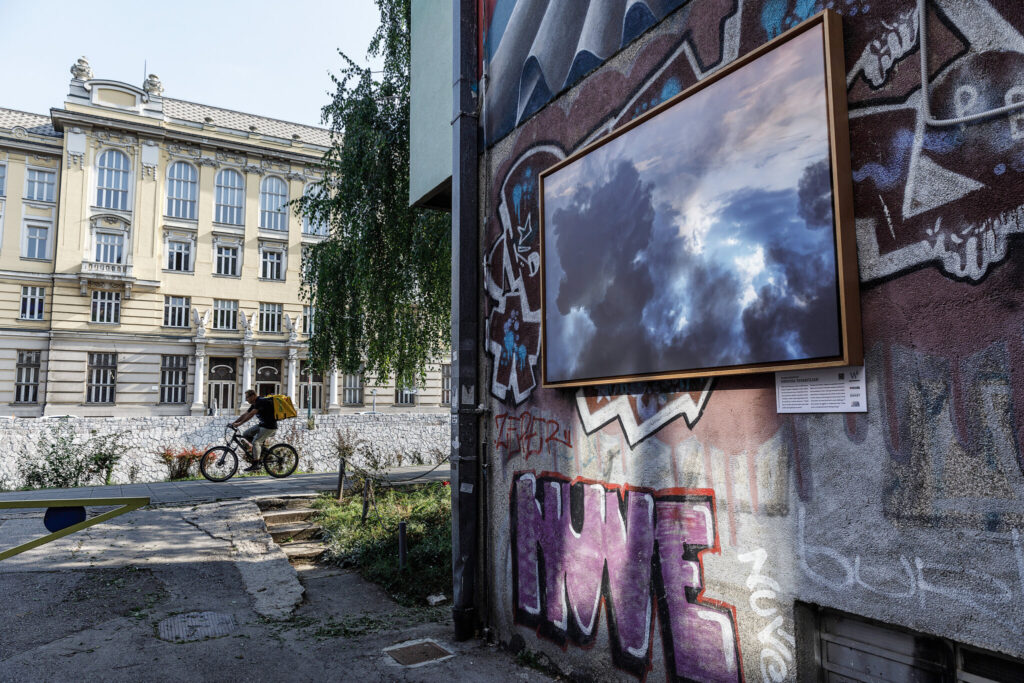
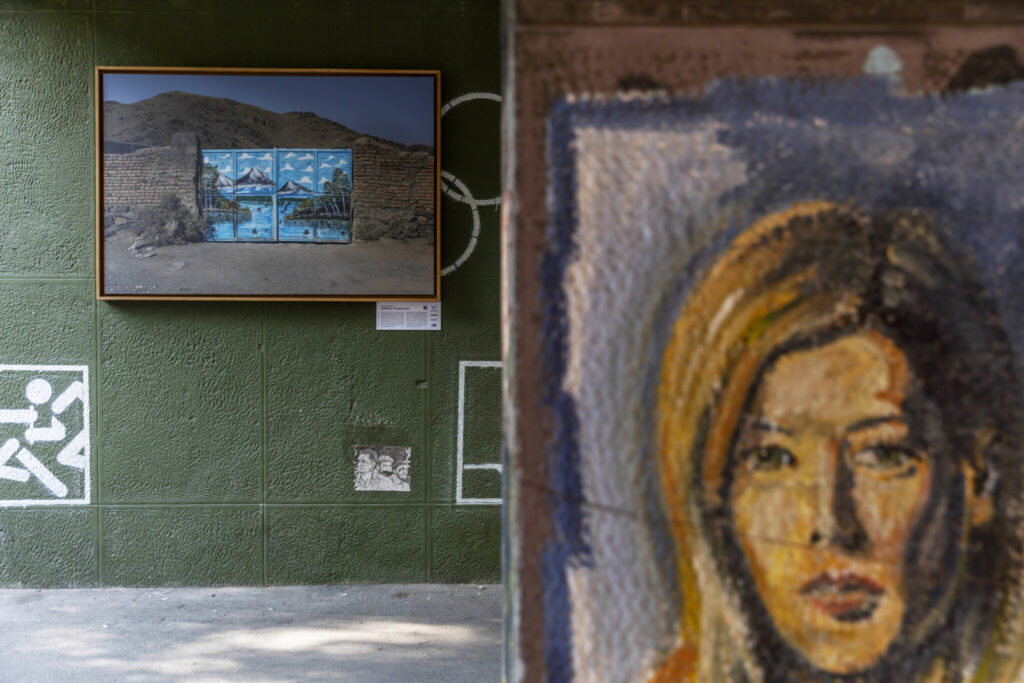
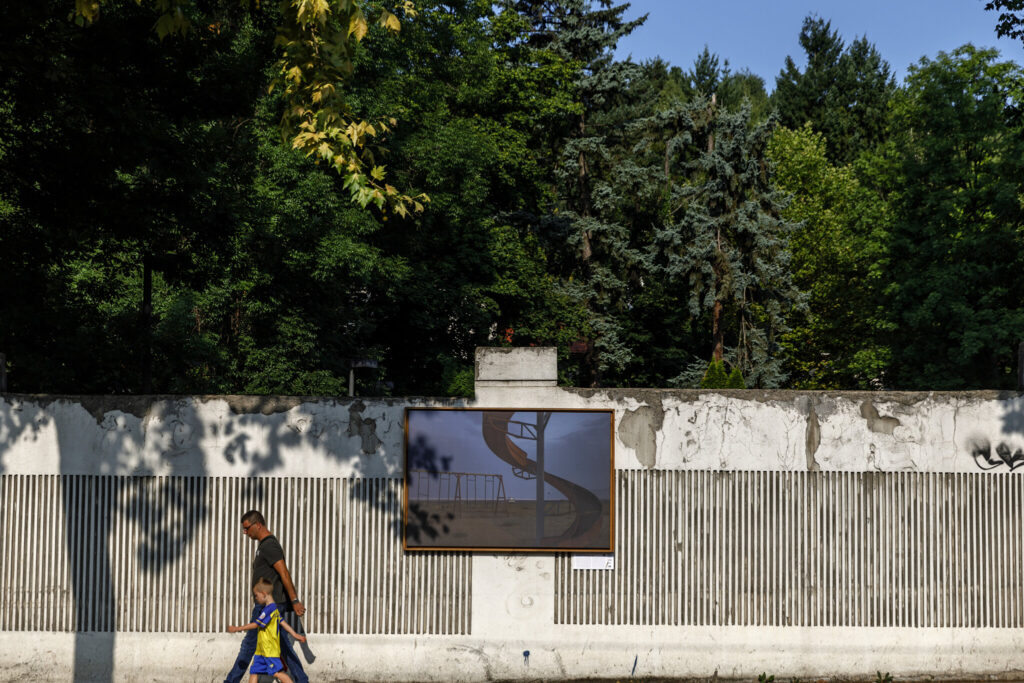
Displayed at 15 locations across Sarajevo
In the photo exhibition “And they laughed at me”, Iranian artist and member of the prestigious Magnum agency, Newsha Tavakolian searches through her archives not to select her best work, but to find photos that were never meant to be shown. This procedure was supposed to help her understand why she was stuck in her work as an artist. These technically flawed photos from her youth reveal the mistakes that every new photographer makes when they are still unsure of their camera and the nature of light. Her interest in these photographs seems to be philosophical.
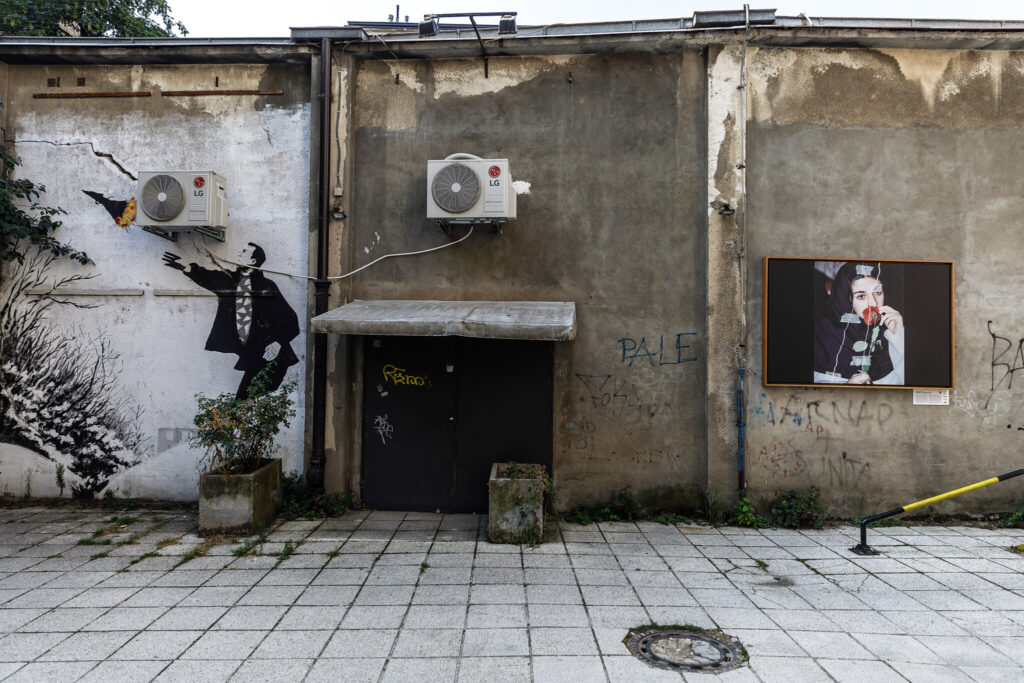
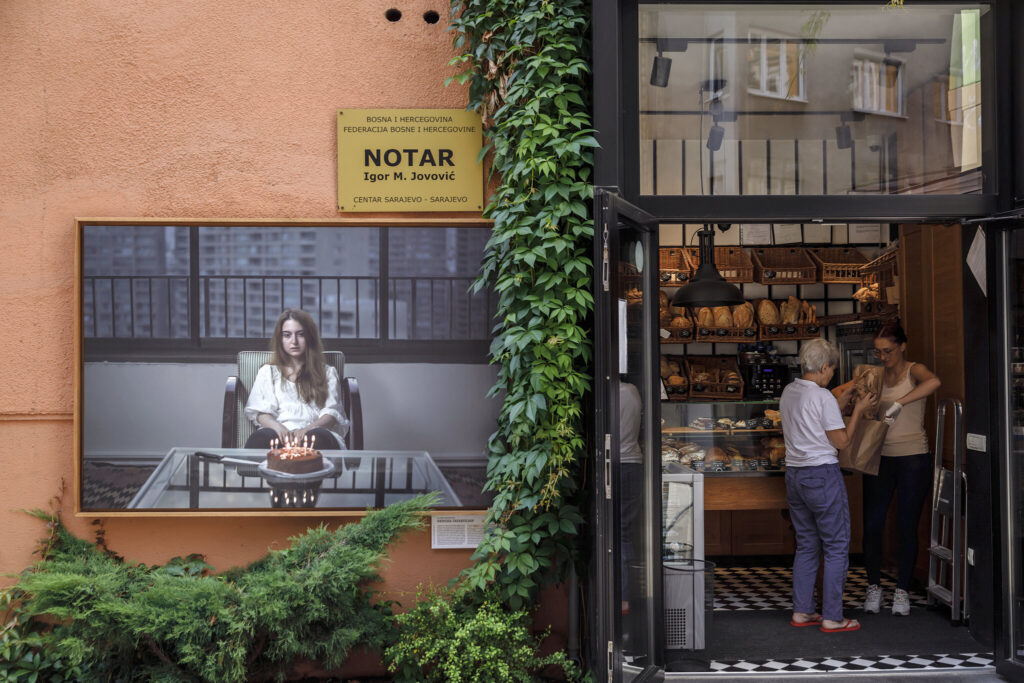
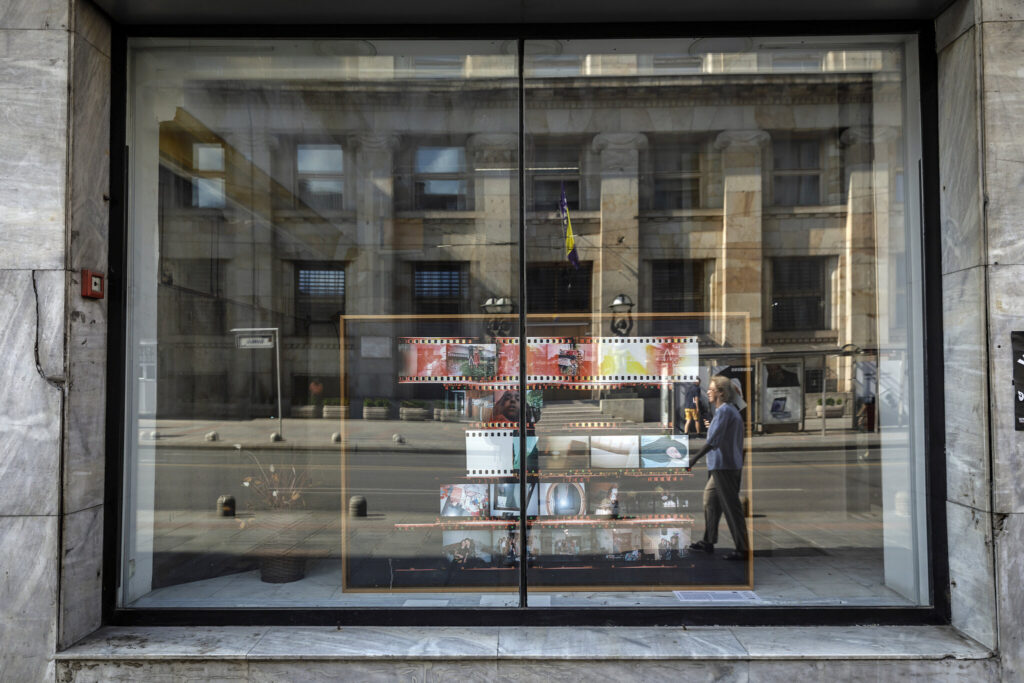
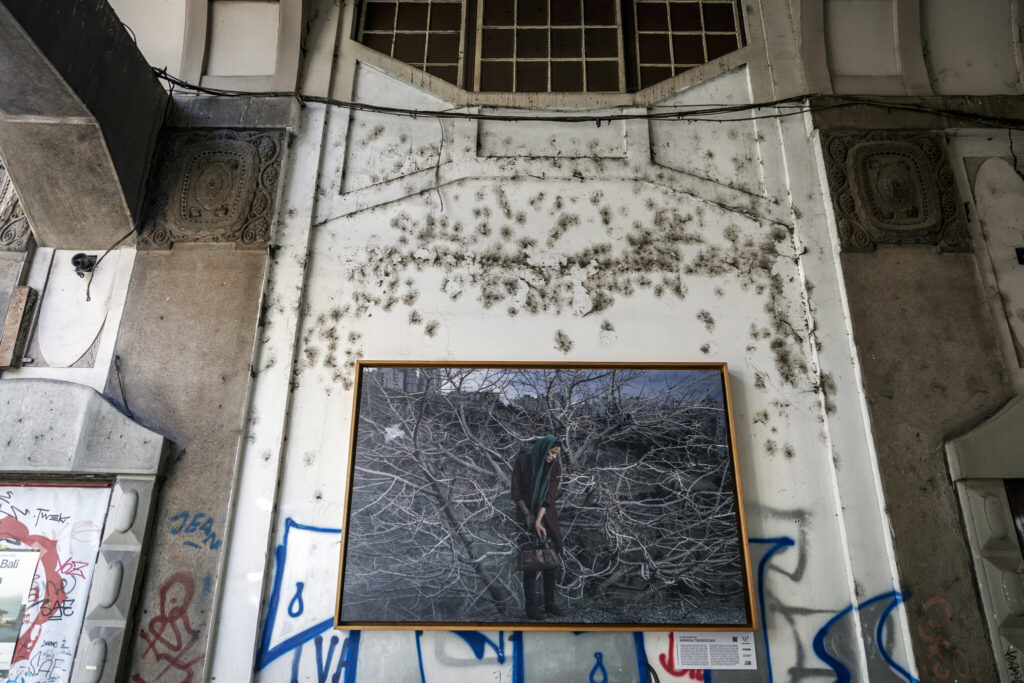
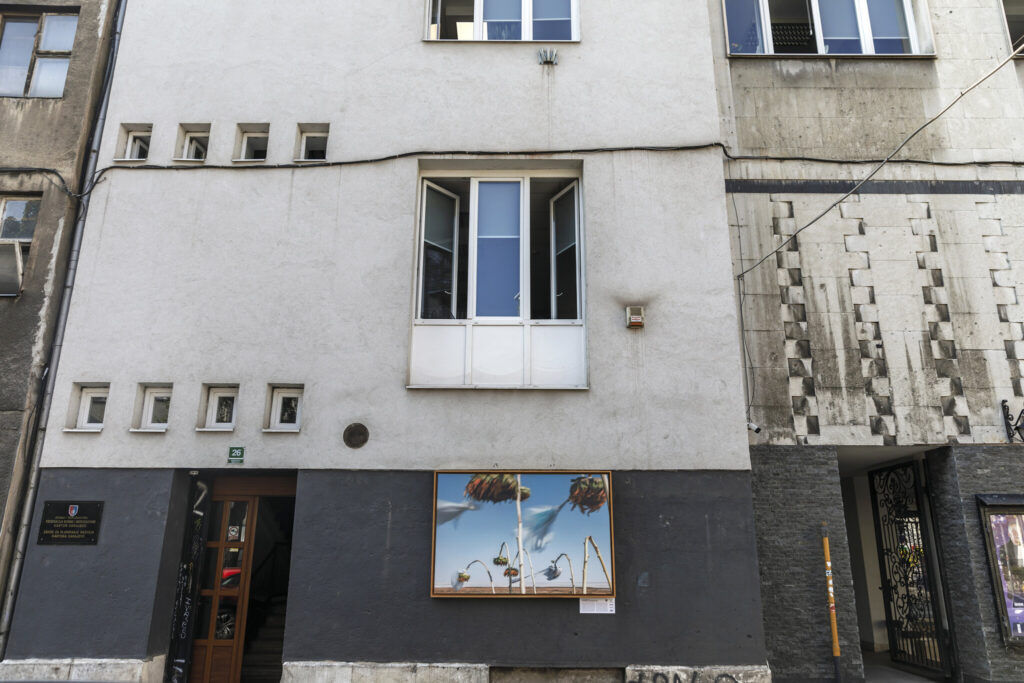
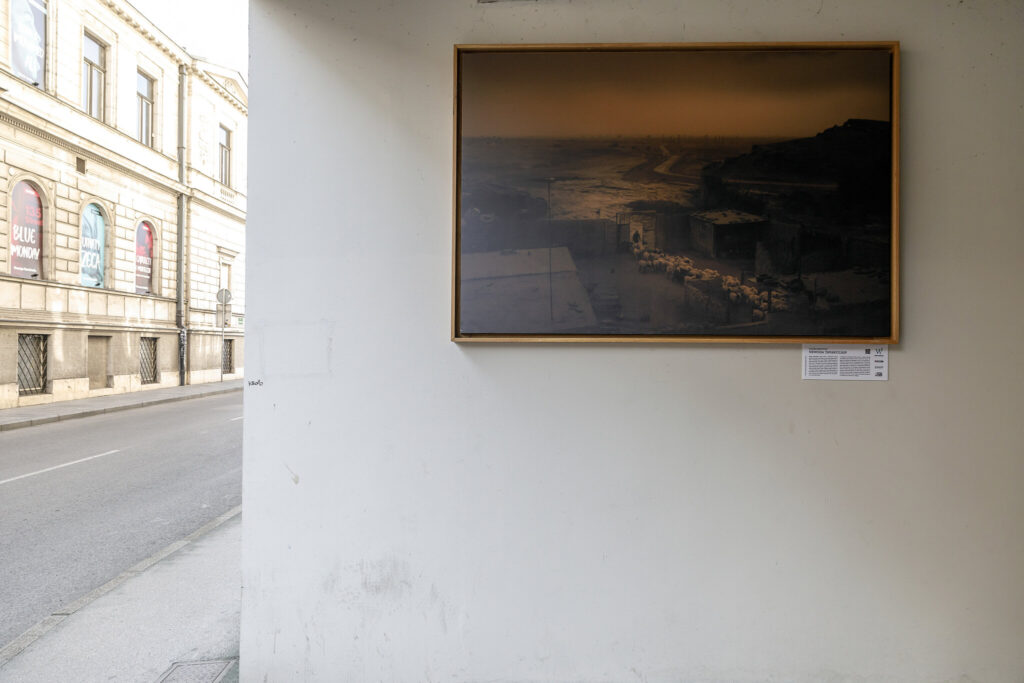
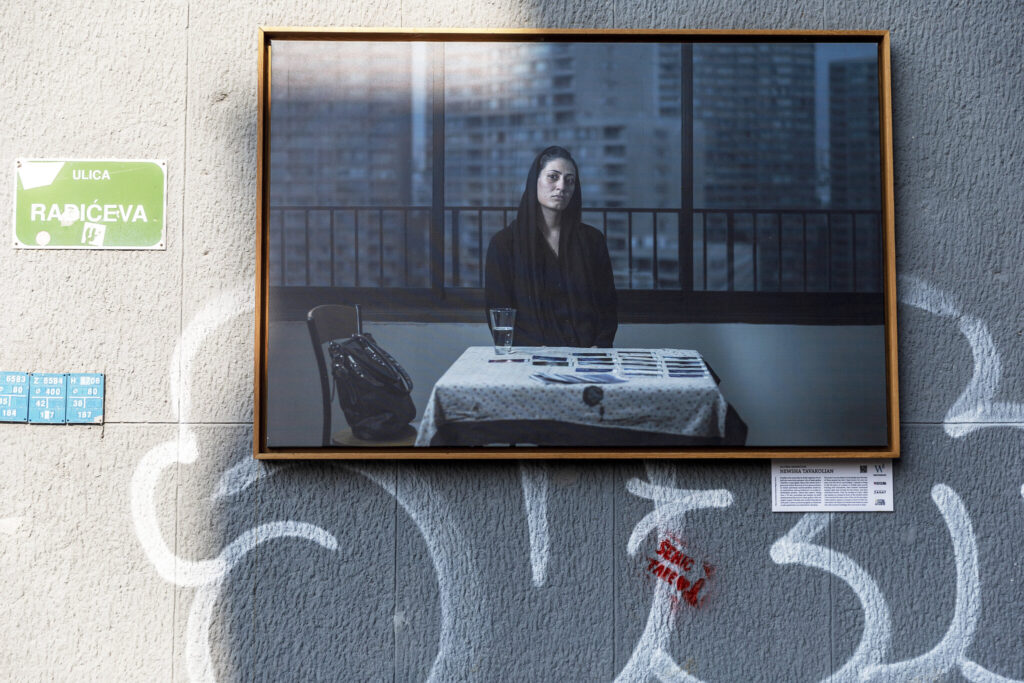
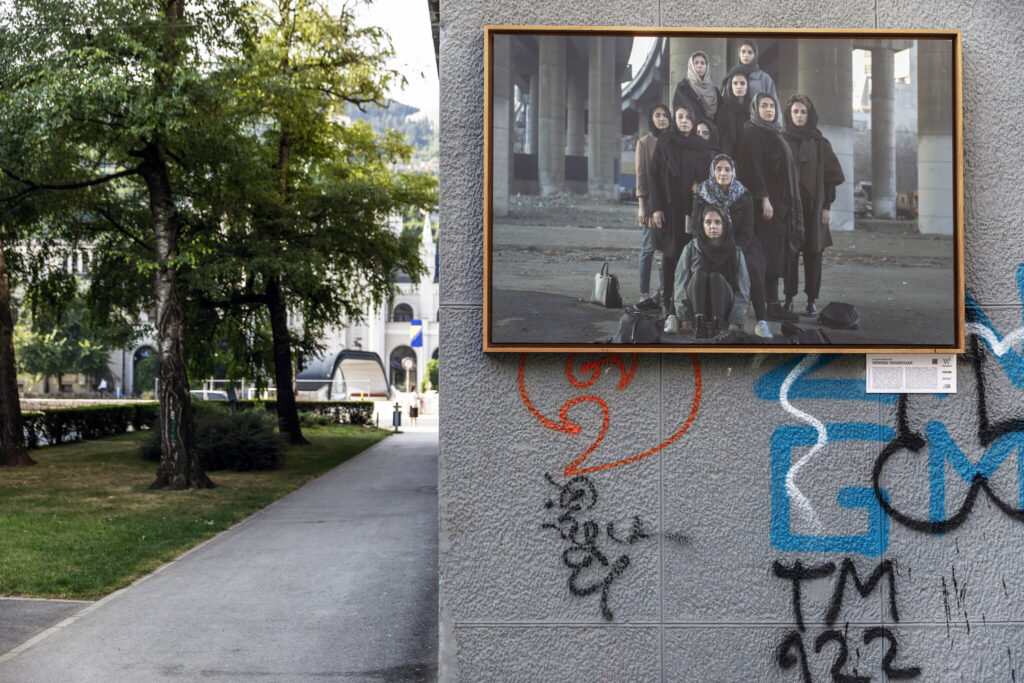
The photo exhibition “And they laughed at me” was designed by Lejla Hodzic and placed in 15 locations in the center of Sarajevo as part of the WARM Festival, the Culture on the Streets program and the Festival in the Center. Photos measuring 140x210cm are printed on canvas and framed by massive wooden frames made by the company ZANAT from Konjic.
And They Laughed at Me
In ‘And They Laughed At Me’, Tavakolian has trawled through her archives not to pick her best work, but instead dig up what she refers to as eyesore photos. This unusual exercise is to help her understand why she is stuck in her work as an artist. On the surface she means the technically sub-par photos of her youth. The mistakes that any new photographer, still unsure of her camera and the nature of light, makes over and over again to learn. But these are clearly out-takes, why is she interested in these photos that were never meant to be shown.
In this selection, she is not just reviewing her technical development from a novice photographer. As a seasoned artist with a bend for social issues, she is digging deep into her practice to understand the way she photographed and why she photographed what she photographed.
From the poorly framed to the blurred, to the shot-from-the-hip snap, these photographic non-sequiturs contain a wealth of physical data about the materiality of the time, from the cars on the streets to the dour Hijab style of the 1990s women had to adhere to in order to be able to move freely in society. There are significant national moments like the unusable photos she has taken in the offices of a reformist newspaper she was working in when the arrested editor has returned to the newsroom. Interspersed with these there are shots of private moments in her family home weaving a textured image of Iran’s inside life into the fabric of a society dripping with hard ideological politics. There are shots of friends who have long left Iran, and shots of herself in her teens. There are references to the country’s surprising connection to the outside world’s popular trends in the two boys mimicking the iconic scene from the film Titanic. Nature tries to break through these dull moments which probably didn’t seem all that dull at the time.
Iranians know this time; their memory is jogged with each one of these shots. It is President Khatami’s time, and the place is buzzing with hope and possibility for change. The country is shut off from the world officially but connected through bootleg Western culture, and revolutionaries of yesteryear pushing for what they called reforms. They open newspapers and employ young journalists like Tavakolian who arrive on the scene with the family’s broken camera at 16 years of age with no training. This should be a time for nostalgia.
Tavakolian is from that generation of Iranians shaped by the uncertain years after the revolution and the eight-year war with the neighboring Iraq. The ones born in the 80s, they are known as the generation with audacity, as mavericks who had to work within a hostile system and work it to their advantage. Stuck right between the baby boomers who brought about the revolution and Generation Z who now want it dismantled. But There is no trace of nostalgia in her backward glance. From the disconnected shots at the start of the book to the polished portraits of her conceptual work that she is now known for, there is a sense of stifle and truncation, a heaving sadness.
Standing from where we are now, looking back, the hope that exemplified that time, leaves a bad taste in the mouth. The photo of a pair of legs cut from the torso on the tarmac of the street is now a trigger. Once it was just a mistake to be binned, now it’s testament to how we receive images differently from the streets in Iran which have been the scene of some kind of protest in the past 15 years. Nowadays images that show people’s legs cut off from the waist down is a method of citizen journalism showing what is happening on the streets without endangering the protestors’ identities. What was once trash is now a new code. That particular eyesore photo now contains a signal for anxiety and foreboding. The eyesore photos have a triggering effect because the immediately discernible material differences between then and now, the memory of the hope for change that had mesmerized the nation, only serve to highlight how nothing has actually changed; Iranians are still struggling to achieve the freedoms that the revolution promised but reneged on.
These scattered visual fragments are like flashbacks, involuntary neurological emissions that visit someone with trauma. Disconnected textures of a time that has passed but has not ended.
Memories change each time they are revisited, affected by the current environment in which a they are recalled. New expectations and cultural biases reshape the contours of memory.
What makes Tavakolian cast such a dark glance at a time in her life that was the beginning of her stellar career?
The title of this book and the accompanying exhibition holds the clue.
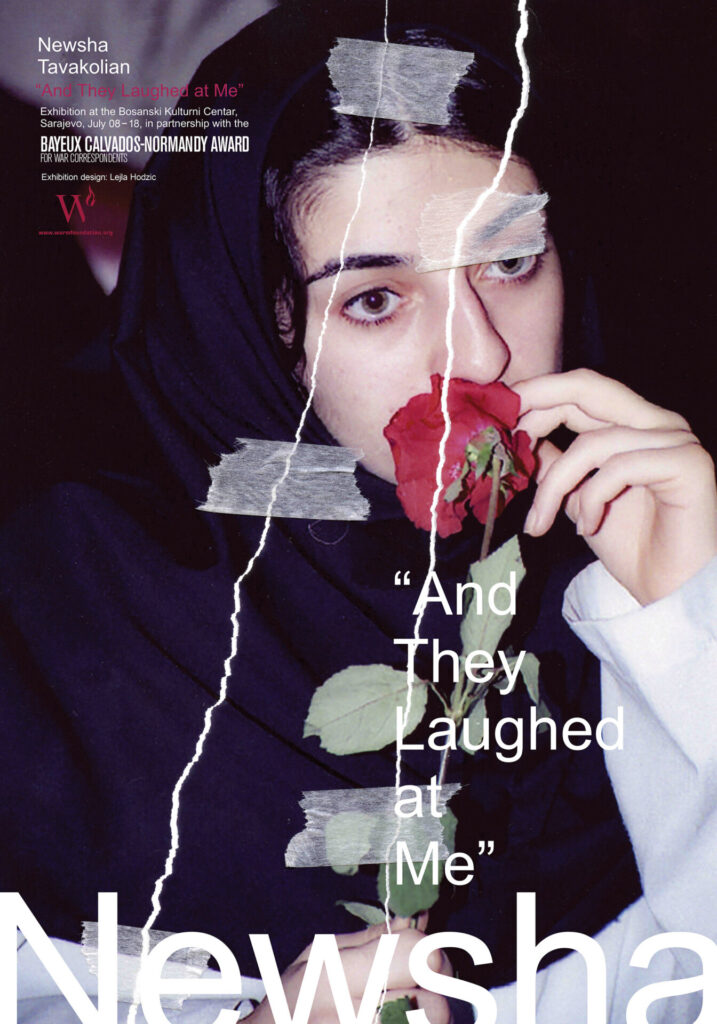
Among other photos in the book, there is a picture of an adolescent girl smelling a rose. This photo was taken at the height of the reform movement in Iran at a presidential election rally. The organizers were handing roses to the young audience. What Tavakolian does to this photo, by bleaching and scratching parts of the photo, destroying the rose as a symbol and effacing the young woman who represents Tavakolian herself, is mercilessly violent. In a final act of demolition, she tears the photograph to pieces but then glues it back together again.
Tavakolian is older and more weathered both professionally and personally. The death of her father and the death knell of politics in Iran has shifted her perspective on life. In “And they Laughed at Me” she is acknowledging that the past cannot be changed or erased, but must ultimately be accepted in order to be able to move forward. Maybe this selection is a kind of farewell to a past, that out of frustration, gave her a melancholic gaze. Maybe she is declaring that she is no longer trying to capture the truth which has proved fluid, but is trying to grab hold of her own authenticity.
Haleh Anvari