
PORTRAITS OF DISSENT
by Adam Ferguson
How Hong Kong rewrote the rules of street protest in the age of mass surveillance
In 2014 I covered the “Umbrella Movement” protests in Hong Kong for The New York Times.
Student protestors were using umbrellas to protect themselves from police pepper spray and heavy monsoon rains. They staged sit-ins in the streets, dressed in black, against a backdrop of skyscrapers, gleaming shrines to capitalism and the free market.
These protests were mostly peaceful. Organized groups handed out water and cleaned the streets afterward. Looking across a sea of people dressed in black, I remember joking with other photographers that it was like being at a Radiohead concert.
2019 was different.
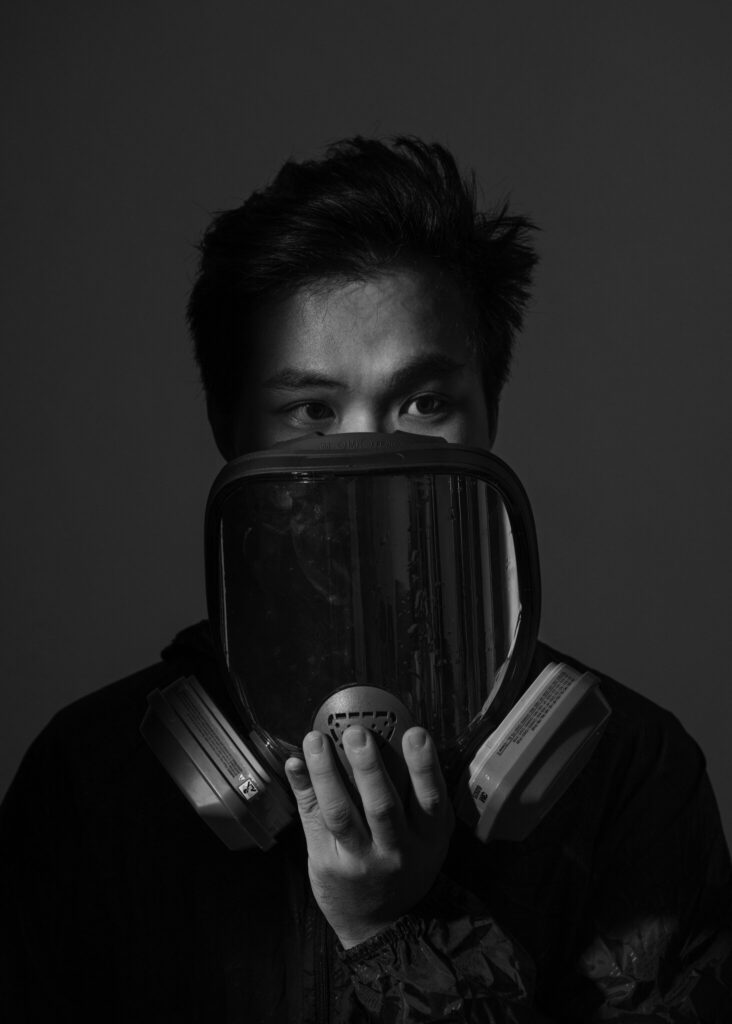
They still dressed in black, but now they wore gas masks, face masks, elbow pads and chest protectors. Tear gas wafted from Kowloon to Central Hong Kong as protesters, dressed like neo-punk gladiators, waged guerrilla war with the police.
The protests had erupted over a proposed extradition bill that would allow extraditions to mainland China, then became a much broader uprising against Beijing’s growing control on the island.
Their war cry was “Be water.” Students would surge through the streets in one part of the city, disperse, then reappear somewhere else, democratically deciding their next move through real-time votes on Telegram. They would come together in streets and alleys, shopping malls, the subway, before vanishing again.
The contrast was surreal. I could leave the protests, walk a few blocks and have dinner among bankers and tourists in the prosperous, international Hong Kong. Then walk five blocks and find myself ducking tear-gas canisters again.
I came to realise I was not just witnessing Hong Kong youth confronting an authoritarian China. I was seeing the future of protest unfolding before my eyes.
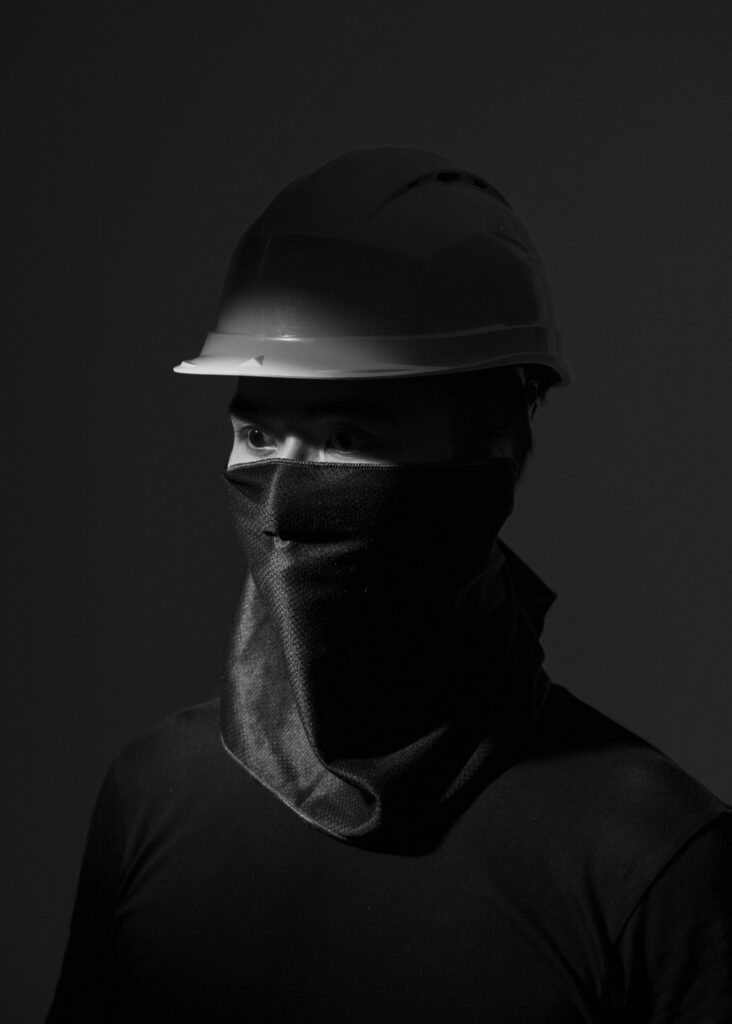
Surveillance had transformed the risks protesters faced. They feared being identified through facial recognition technology, tracked and arrested, including retroactively. Protesters had to operate anonymously. Masks and helmets were no longer simply defensive equipment; they also concealed identities.
Hong Kong protesters were showing the world how uprisings would operate in the future, adopting guerrilla tactics rather than openly standing up to authority.
By the end of 2019, more than five thousand protesters had been arrested.
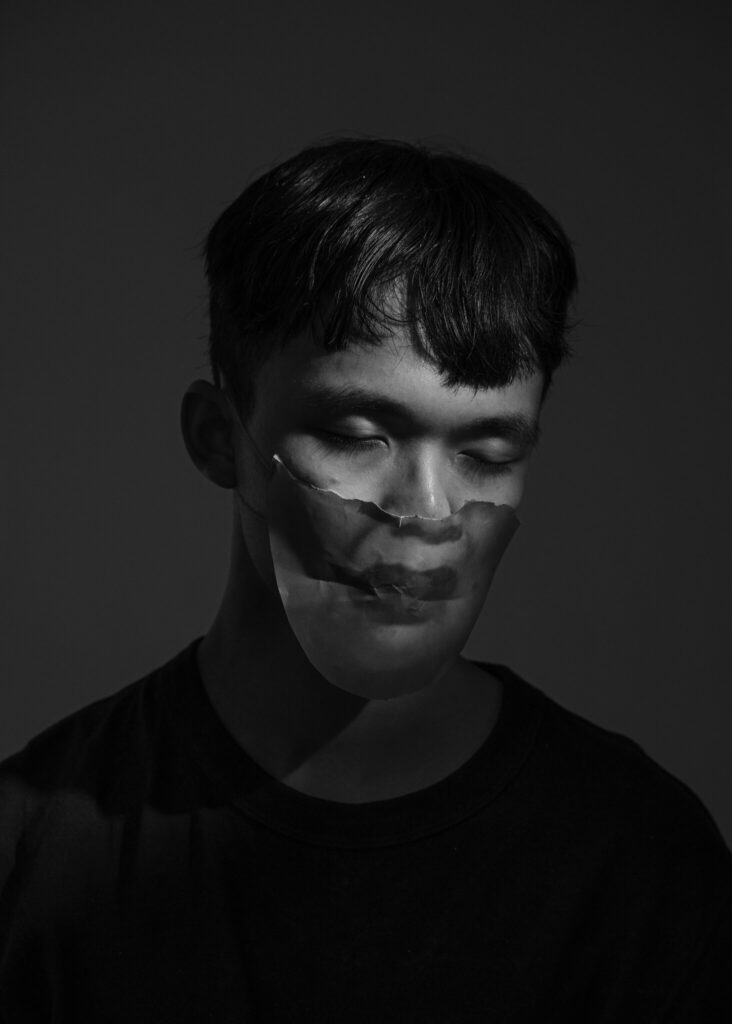
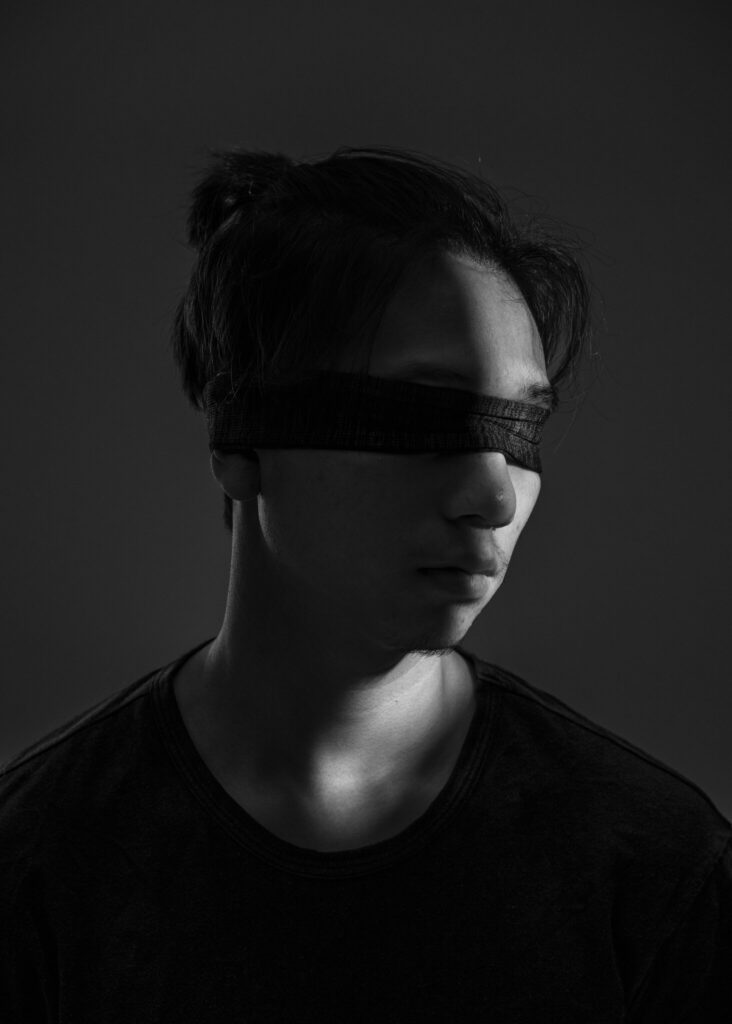
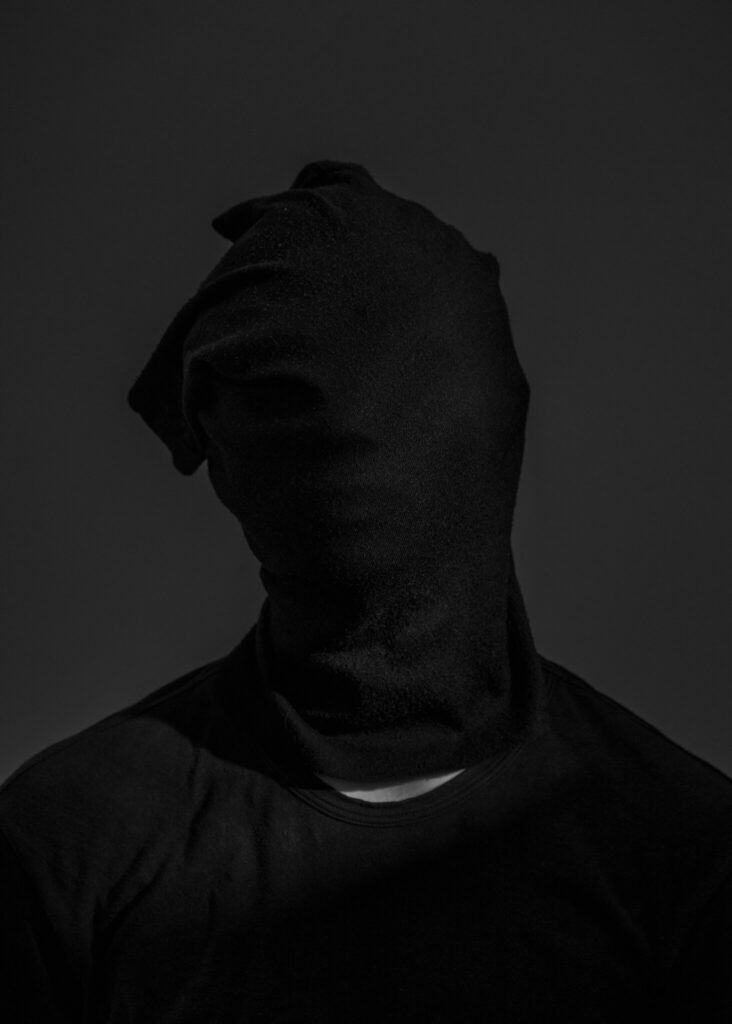
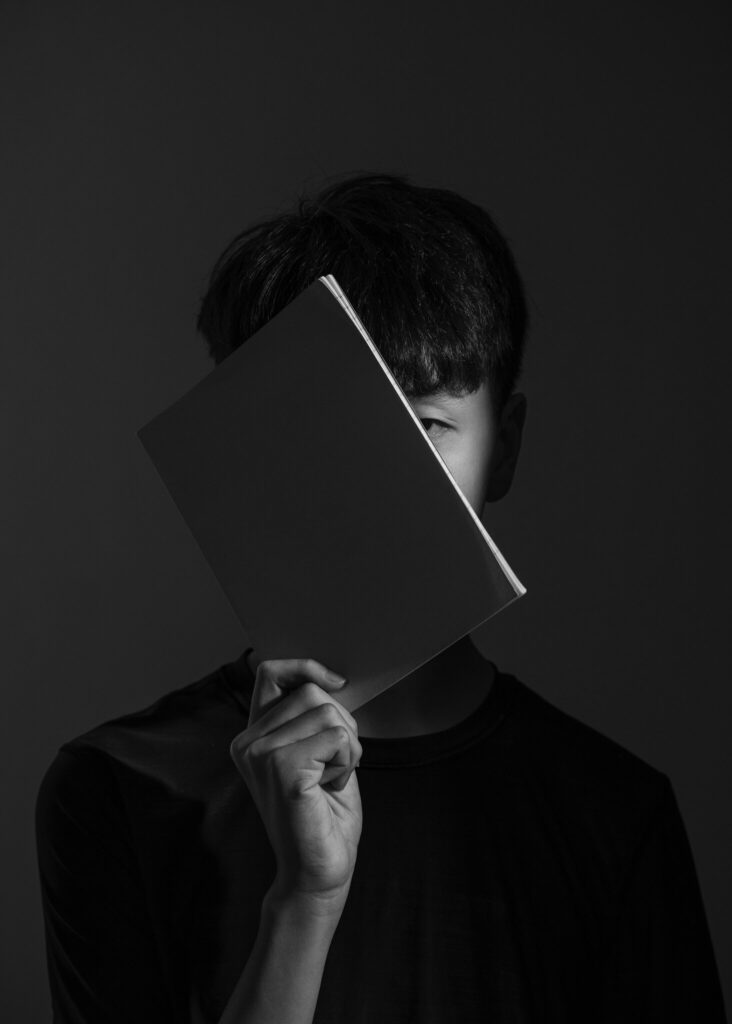
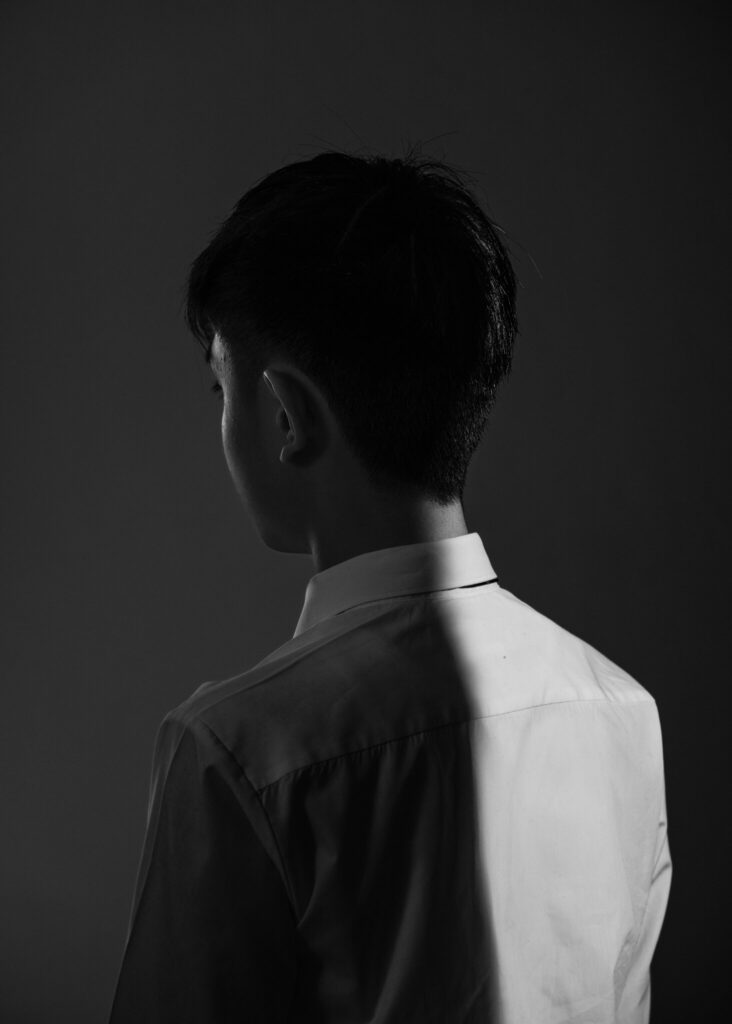
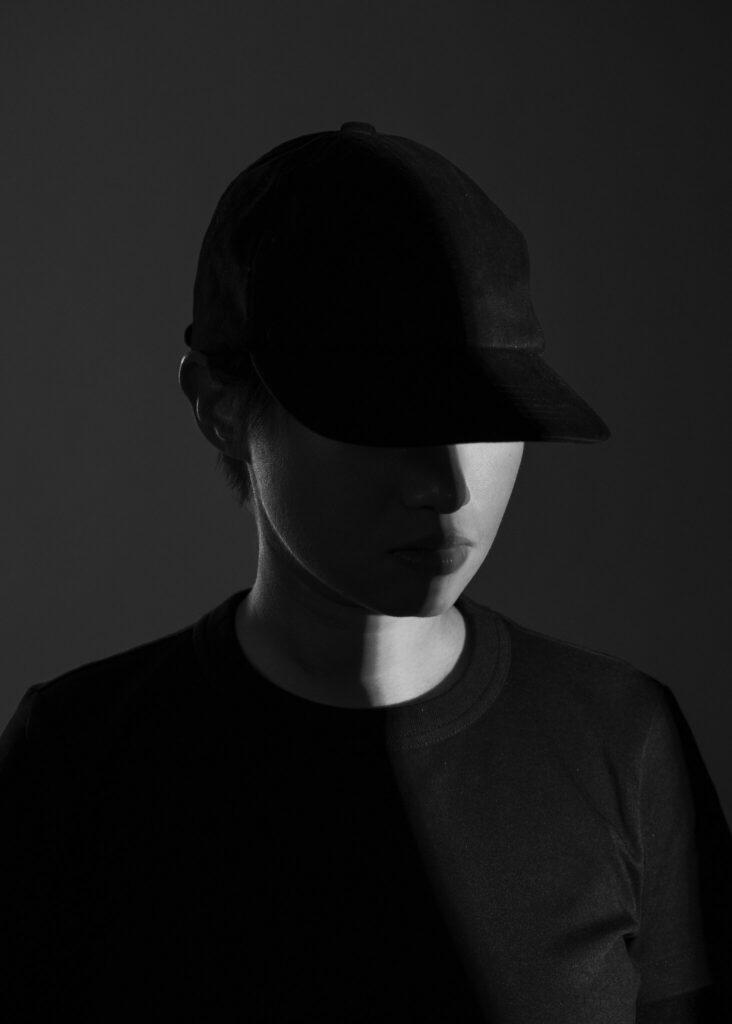
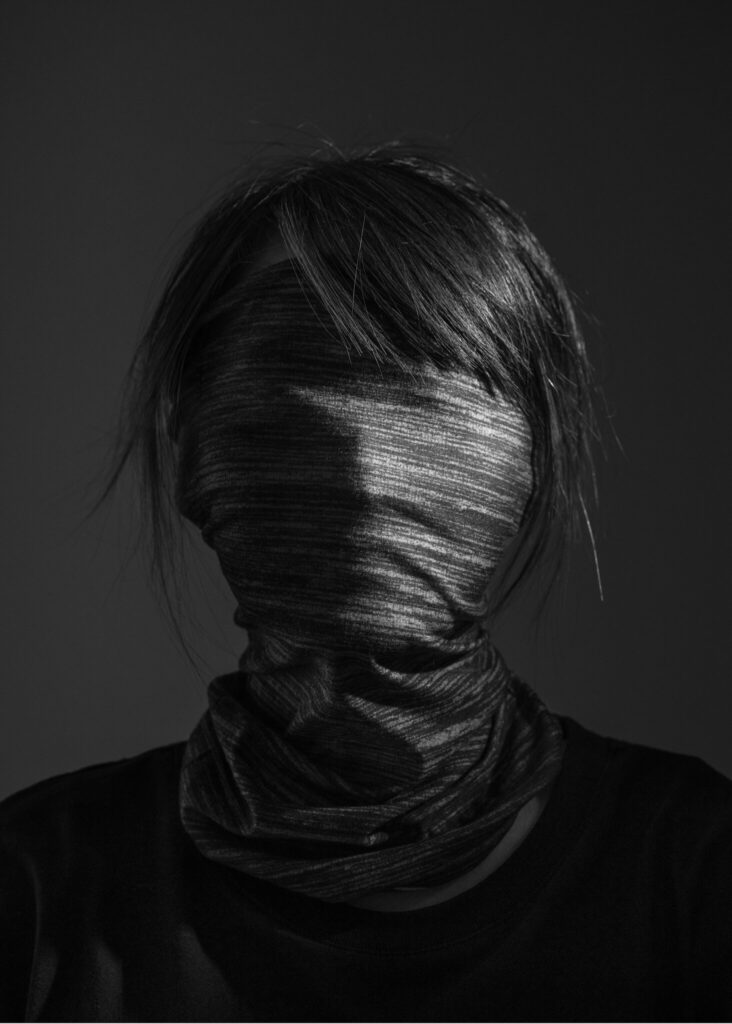
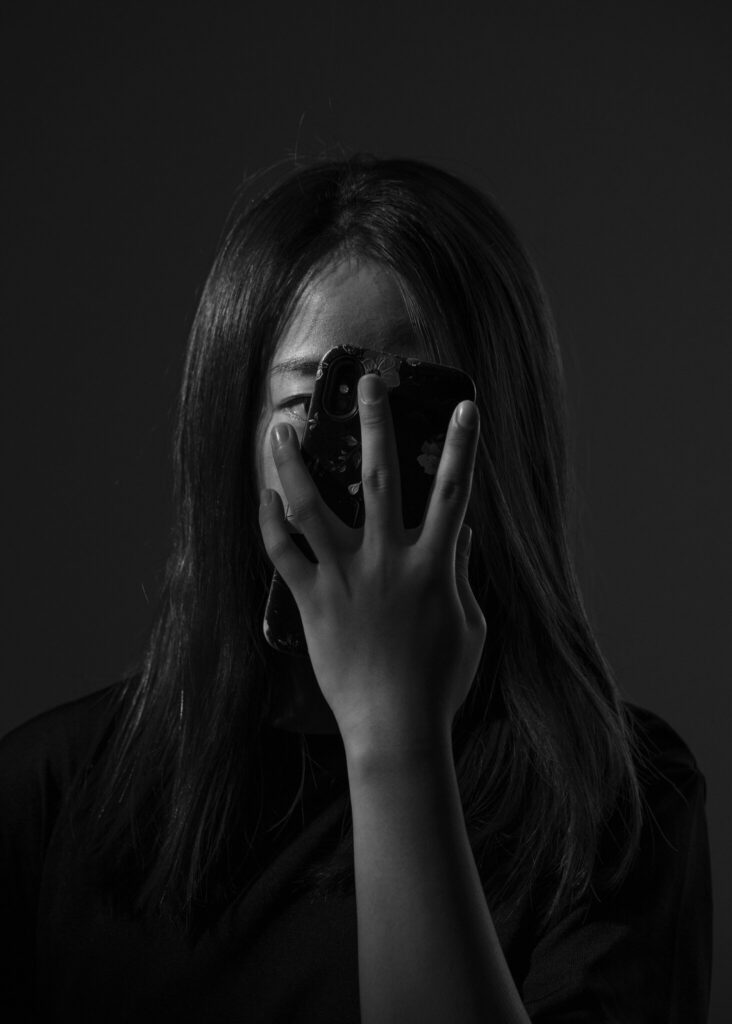
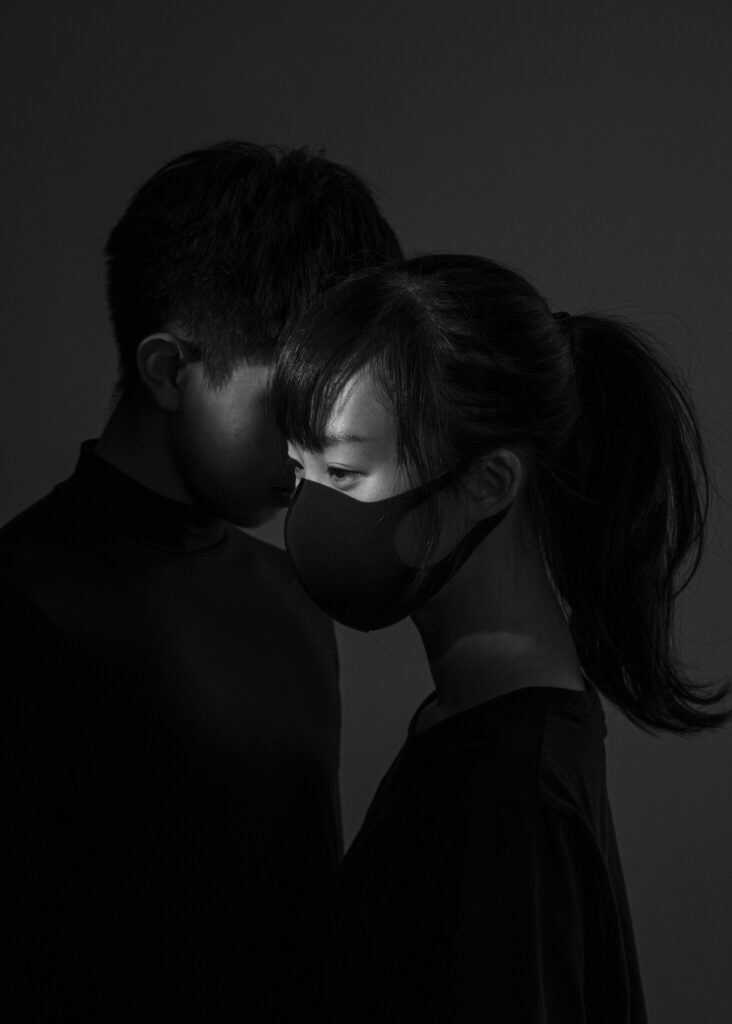
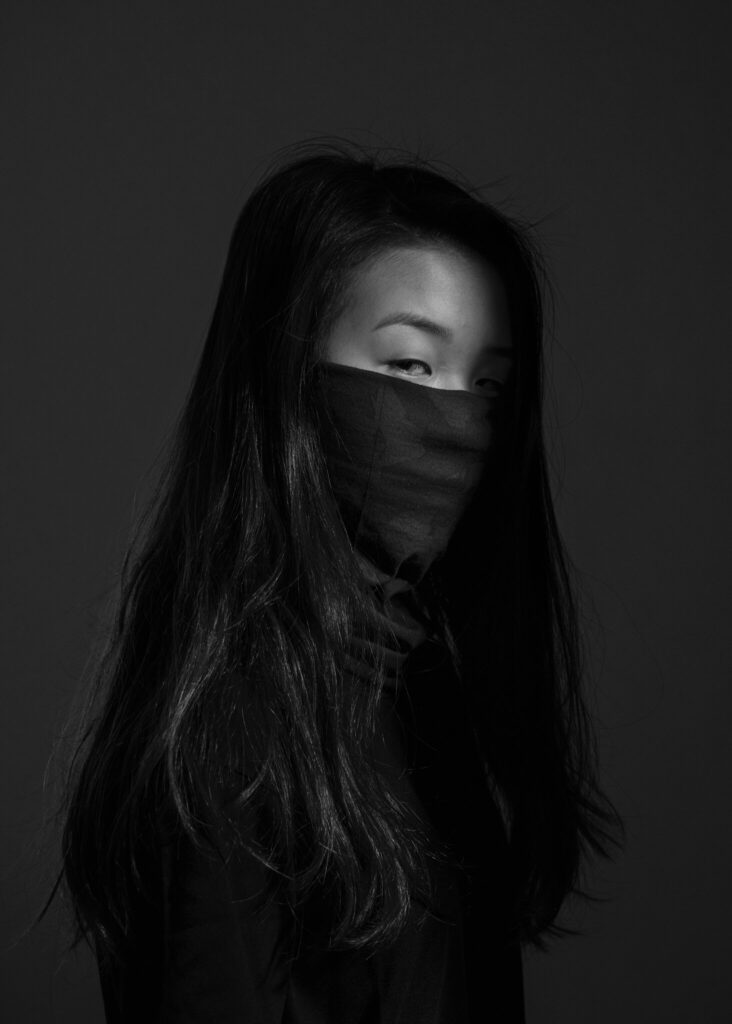
I wanted to make portraits that went beyond the spectacle of street battles : I decided to photograph protesters in a studio, obscuring their identities through lighting, poses and their protective equipment.
On the first day of the shoot, I realised something wasn’t working. Under the lights, the protesters were so hidden beneath their gear that the people themselves had disappeared. I was photographing masks, helmets and protective clothing, not idealistic young students. In trying to portray the effects of state surveillance on individuals, I had erased the very people affected by it.
I had to change my tactics.
Instead of asking the protesters to wear all their protest gear, I asked them to sit unmasked to start. Many of the protestors were nervous because they were concerned about being identified. I assured them I would conceal their faces and conversed with each of them about what they had brought and how we could use it. Together, we built their costume for the photograph, just enough to conceal their identity but not so much that we lost a sense of the individual.
One day, after I photographed two young students, they prepared to leave the studio. One put on his white school shirt, impeccably ironed, with a tie. The power of this image felt more important than gas masks. I needed to make an image that showed they were school students. Kids.
I asked the students to sit for me again.
I had one turn his back on the camera, then asked the other what he had in his backpack
“My school books,” he replied.
“Would you like to hold one of them in front of your face?” I asked. And he did.